

Best Kitesurfing Spots in Europe for Beginners

Learning to kitesurf is 80% picking the right water. Get that wrong — gusty wind, deep water, a crowded beach with no rescue boat — and you’ll spend your whole trip fighting the spot instead of learning the sport. Get it right, and you can go from body-dragging to your first tiny water starts inside a week.
The good news for anyone based in Europe is that you don’t need to fly to the Caribbean to find that kind of forgiving setup. From a salt lagoon in Sicily to a volcanic beach in the Canary Islands, the continent has a genuinely excellent spread of shallow, steady-wind spots built for exactly this stage of the learning curve. This guide walks through five of the best — Lo Stagnone, Punta Trettu, Lagoa de Óbidos, Leucate and El Médano — with the practical details you actually need: skill level, water type, bottom conditions, launch setup, wind season and what to expect from local schools. By the end you’ll know which one fits your dates, your budget and your nerve.
Quick Takeaways
- Shallow, flat water beats strong wind every time when you’re learning — it’s what lets you stand up, reset your kite and try again without exhausting yourself.
- Lo Stagnone (Sicily) and Punta Trettu (Sardinia) are Europe’s two benchmark lagoon spots: waist-deep water, sea-grass bottom, near-flat surface even in 20+ knots.
- Lagoa de Óbidos (Portugal) is the safest of the five — a fully enclosed lagoon with no open-sea current and a gentle Nortada wind.
- Leucate (France) rewards beginners who pick their days carefully — the lagoon side is forgiving, but the famous Tramontane can turn punchy fast.
- El Médano (Tenerife) is the only spot on this list that works all year, thanks to reliable Atlantic trade winds and a mild winter climate.
- Every spot listed has certified kite schools nearby — for your first sessions, book a lesson rather than relying on borrowed gear and YouTube.
- Book earlier in the season (April–June) or later (September) if you want warm-enough water without the peak-August crowds.
What Makes a Spot Good for Beginners?
Before comparing individual beaches, it’s worth being clear about why certain spots make learning easier, because it’s rarely about which destination looks best in photos. Instructors across Europe consistently point to the same four ingredients, and once you know them you can judge any new spot yourself — useful the moment you start planning trip number two.
Shallow water first. Anywhere you can stand — waist-deep or less — removes the single biggest source of early frustration: swimming after a dropped kite, or fighting to relaunch from deep water while exhausted. Lagoons like Lo Stagnone and Punta Trettu are shallow across huge areas, so a mistake costs you a short walk, not a 200-metre swim back to shore.
Steady, predictable wind beats strong wind. A consistent 15–20 knot thermal or trade wind is far easier to learn in than a gusty 25-knotter that surges and drops every few seconds. Gusts are what pull beginners off balance and cause accidental relaunches at the worst moment. This is one reason Mediterranean lagoons with reliable afternoon thermals — rather than storm-driven coastal wind — dominate this list.
Side-shore or onshore wind direction, not offshore. If your kite depowers or you can’t relaunch, onshore and side-shore wind pushes you back toward the beach; offshore wind pushes you out to sea, which is genuinely dangerous without a safety boat on standby. Every spot below has a dedicated beginner zone precisely because of this.
A soft, obstacle-free bottom — sand, fine mud or short sea grass rather than rock or reef — means the inevitable falls, drags and board recoveries don’t come with cuts and bruises. Combined with a wide, uncrowded launch area for laying out lines safely, these four factors are what actually separate a forgiving learning spot from one that will just slow you down.
Top 5 Kitesurfing Spots in Europe for Beginners
The five spots below were chosen because they consistently show up as the standout beginner destinations across schools, instructors and rider communities in Italy, Portugal, France and Spain — not because they’re the most famous or the most photogenic. Each one solves the shallow-water, steady-wind equation in a slightly different way, so which one suits you best often comes down to season, travel distance and how much of a beach-town holiday you want alongside the kiting.
🏄 Lo Stagnone (Sicily, Italy)

Skill Level: Beginner to advanced | Water Type: Flat, shallow lagoon | Bottom: Sand and seagrass, knee-to-hip deep | Launch: Wide grass and sand shoreline, road accessible
Lo Stagnone sits in a nature reserve between Marsala and Trapani on Sicily’s west coast, sheltered by a chain of small islands that turns the open sea into a near-flat lagoon. The water rarely exceeds 1.5 metres across most of the kiting zone, and in large sections you can walk for hundreds of metres without it passing your hips. Combined with a reliable thermal wind that builds through the afternoon from roughly April to October, it’s become one of the default answers whenever European instructors are asked where to send a first-timer.
What sets Lo Stagnone apart from other flatwater lagoons is sheer size — it’s one of the largest lagoons of its kind used for kitesurfing in Europe, so even in high season the crowd spreads out rather than clustering on one stretch of beach. That matters more than people expect: a packed beginner zone means more near-misses with tangled lines, not fewer. A useful long-tail search if you’re planning a trip is “flat water kite lagoon Sicily beginners” — it’ll surface the specific school zones locals actually recommend rather than generic tourist listicles.
Peak Season: May – September
This period offers the most consistent thermal wind, which builds predictably in the early afternoon (around 15–22 knots) and lasts until sunset.
Best Shoulder Months: May & September – October
If you prefer fewer crowds and lower costs while still enjoying excellent wind conditions, May, September, and October are ideal.
🏄 Punta Trettu (Sardinia, Italy)
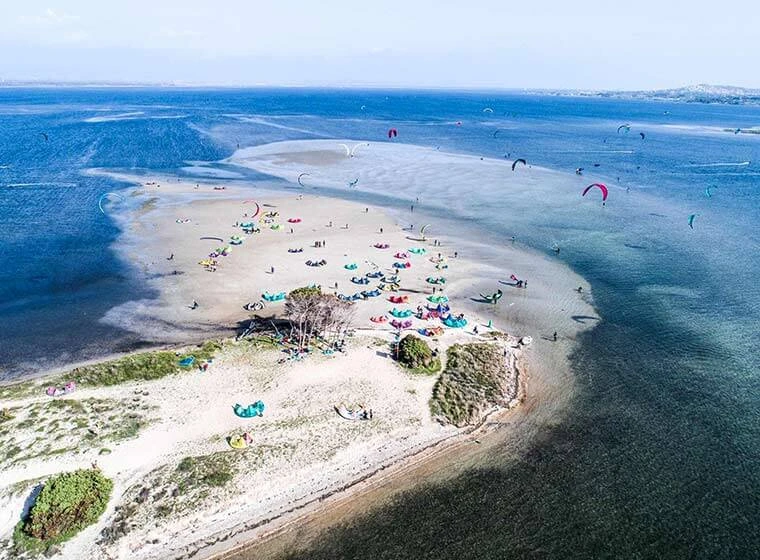
Skill Level: Beginner to intermediate | Water Type: Mirror-flat, shallow lagoon | Bottom: Sand, mostly waist-deep | Launch: Long sandy beach, dedicated kite zone
On Sardinia’s southwest coast, Punta Trettu has quietly become the spot Italian instructors send their own beginner students to when Lo Stagnone is inconvenient to reach. It’s a genuinely dedicated kitesurfing beach — most visitors are there for exactly one reason — with flat, shallow water protected from the swell that hits Sardinia’s more exposed coastlines.
The standout feature here is wind consistency from multiple directions: the Mistral, Scirocco and Ponente can each bring rideable conditions, so a change in forecast rarely means a wasted day the way it can at single-direction spots. That’s a genuinely underrated advantage for a short beginner trip, where losing two of your five days to wrong-direction wind can set your progression back noticeably. Water depth stays manageable across most of the bay, which keeps self-rescue simple while you’re still building confidence with relaunches — one of the more searched long-tail terms among first-timers is “how to relaunch a kite in shallow water,” and Punta Trettu is about as forgiving an environment as you’ll find to practise it.
Peak Season: June – August
During the summer, high temperatures and clear skies create dependable afternoon thermal breezes that regularly reach 15–25 knots.
Best Shoulder Months: May & September – October
For the best balance of steady wind, pleasant weather, and smaller crowds, the shoulder months are often considered the top choice.
🏄 Lagoa de Óbidos (Portugal)
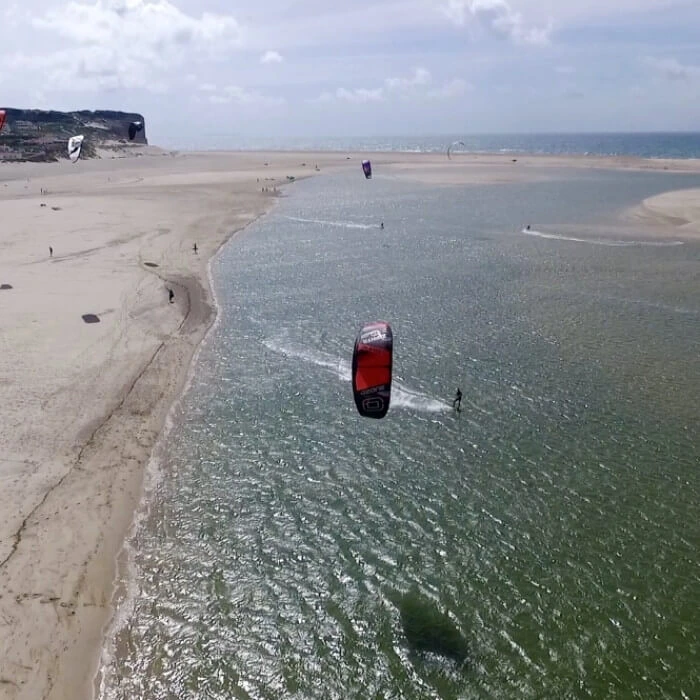
Skill Level: Beginner | Water Type: Fully enclosed flat lagoon | Bottom: Sand and mud, shallow throughout | Launch: Grass and sand banks, easy car access
About 90 minutes north of Lisbon, the Óbidos lagoon is arguably the single safest spot on this list, simply because it’s landlocked — there’s no ocean current, no swell and no risk of drifting out to open water if something goes wrong. The lagoon connects to the Atlantic through a narrow channel, but the kiting area itself behaves like a large, wind-swept pond.
The prevailing wind here is the Nortada, a thermal northerly that builds reliably through spring and summer afternoons without the sudden gusts you get on more exposed coastlines. For anyone nervous about their first sessions — or parents looking for the safest possible spot to bring a teenager into the sport — this combination of enclosed water and gentle, predictable wind is hard to match elsewhere in Europe. It’s also noticeably quieter than the big-name Mediterranean spots, which suits riders who’d rather not learn their first water starts in front of an audience. Search interest around “safest kite lagoon for beginners Portugal” consistently points back here for good reason.
Peak Season: June – August
During mid-summer, thermal acceleration is at its strongest, offering nearly daily kiteable wind.
Shoulder Months: May & September – October
If you want to ride near the estuary mouth or prefer fewer crowds, the shoulder months are ideal.
🏄 Leucate (France)

Skill Level: Beginner (lagoon side) to advanced (open coast) | Water Type: Flat lagoon and choppier open sea | Bottom: Sand, some patches of shell and grass | Launch: Sandy lagoon banks and beachfront zones
Leucate is a name every European kiter eventually hears, largely because of the Tramontane, a wind so reliable it blows on more than 300 days a year and has made this stretch of the Languedoc coast one of France’s flagship kite destinations. For beginners, the trick at Leucate is knowing which side of the peninsula to use: the Étang de Leucate lagoon behind the beach offers flat, sheltered water that’s genuinely beginner-friendly, while the open coastline can turn into serious Big Air territory once the Tramontane picks up past 25 knots.
This dual personality is actually a strength once you understand it — you get a forgiving lagoon to learn in during your first days, with a proper high-wind Mediterranean spot right next door to progress into once you’re comfortable. The trade-off is that the Tramontane is technically an offshore wind on parts of the coast, so lessons here lean heavily on local schools who know exactly which zone stays safe on any given wind strength. If you’re researching independently, “Leucate beginner kite lessons lagoon” is the more useful search than general Leucate content, most of which is written for advanced freestyle and Big Air riders.
Best Overall: Spring (April – May) & Autumn (September – October)
These shoulder months provide the most optimal balance of reliable, strong wind, comfortable temperatures, and uncrowded spots.
🏄 El Médano (Tenerife, Spain)
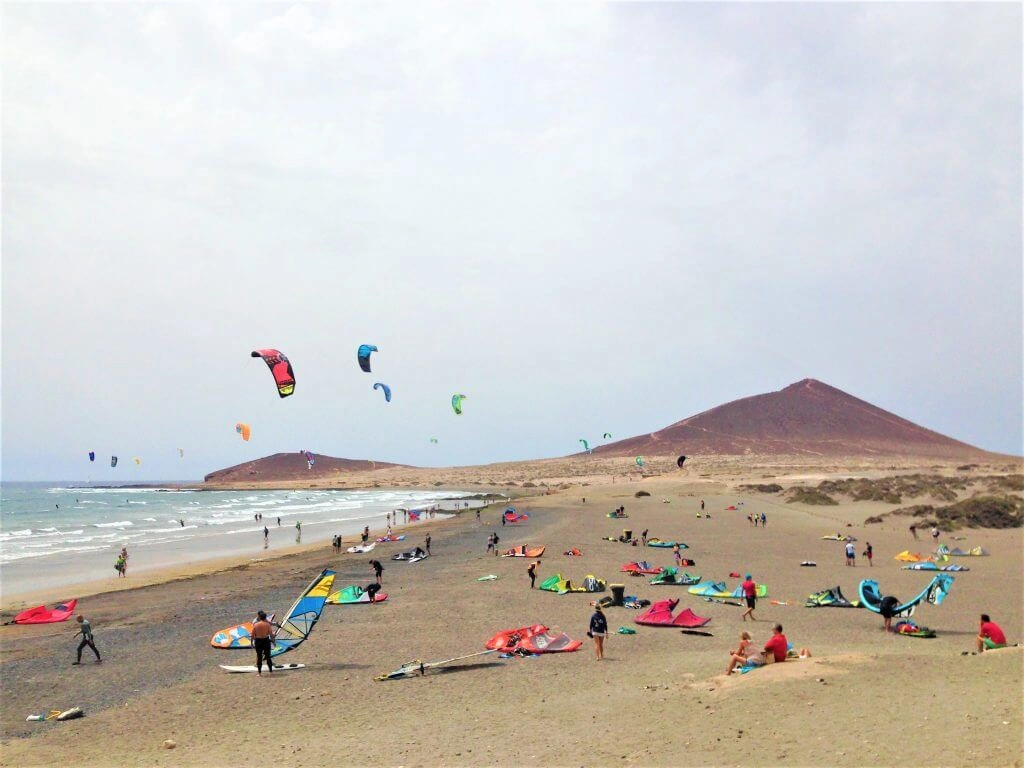
Skill Level: Beginner to advanced | Water Type: Choppy to flat depending on bay | Bottom: Sand near shore, some rocky sections further out | Launch: Wide volcanic-sand beach, lifeguard-supervised
El Médano is the outlier on this list in the best possible way: it’s the only spot where you can reliably book a kite trip in January and expect good wind. Tenerife’s position in the Canary Islands means the northeast trade winds blow consistently for around 300 days a year, and the climate stays mild enough — 20-24°C even in winter — that this is a genuine year-round option rather than a seasonal one.
The northern part of the main bay is specifically where beginners are directed, with a gently sloping sandy bottom and a lifeguard service on duty, which is a level of built-in safety infrastructure not every spot on this list can match. The wind here does tend to build through the day, so instructors typically schedule beginner lessons for the morning session while stronger afternoon conditions get reserved for more experienced riders — worth knowing if you’re booking lessons yourself. For anyone comparing winter kite trips, “year-round kitesurfing spot Europe beginners” is the search that keeps surfacing El Médano, and it’s an accurate result.
Peak Season: June – August
During the summer, trade winds blow with maximum consistency, hitting 20 to 30+ knots on most days.
Best Shoulder Months: May & September – October
For kiters wanting high wind probability with manageable crowds, the shoulder season offers an ideal balance.
Comparing the Five Spots at a Glance
| Spot | Best Season | Water | Best For |
|---|---|---|---|
| Lo Stagnone (Sicily) | April–October | Shallow lagoon | First-time full lessons |
| Punta Trettu (Sardinia) | March–October | Shallow lagoon | Multi-direction wind reliability |
| Lagoa de Óbidos (Portugal) | April–October | Enclosed lagoon | Nervous or younger beginners |
| Leucate (France) | Spring–Autumn | Lagoon + open coast | Learning, then progressing fast |
| El Médano (Tenerife) | Year-round | Bay, mixed depth | Winter and off-season trips |
Frequently Asked Questions
Do I need previous experience before booking a beginner kitesurfing course in Europe? No. All five spots above have certified schools running complete beginner programmes that start with kite control on land before you ever touch a board. A typical introductory course runs 6-9 hours spread over two or three days, which is usually enough to get comfortable with body-dragging and your first water starts.
Which is the easiest kitesurfing spot in Europe for a total beginner? Lagoa de Óbidos and Lo Stagnone are usually the two named first by instructors, mainly because of their shallow, enclosed water and gentle, predictable wind. Punta Trettu is a close third for the same reasons.
What time of year is best for beginner kitesurfing lessons in Europe? Late spring through early autumn (May–September) offers the widest choice of spots with warm water and reliable thermal wind. If you want to avoid crowds, April, June and September tend to have quieter beaches with similar wind reliability. El Médano in Tenerife is the exception — it’s genuinely rideable all year.
How long does it typically take to learn kitesurfing as a beginner? Most riders need 8-12 hours of proper instruction spread across several sessions before they can consistently ride upwind unassisted, though this varies a lot with fitness, board sports background and how often you can get on the water.
Is it safe to learn kitesurfing without a lesson at these spots? It’s strongly discouraged, even at the most beginner-friendly lagoons on this list. Kite lines carry serious force, launch and landing technique needs supervision, and local instructors know the specific wind quirks of each spot — the small cost of a lesson is far cheaper than the cost of a bad accident.
Conclusion
Choosing where to learn matters just as much as choosing a good school. The five spots covered here — Lo Stagnone, Punta Trettu, Lagoa de Óbidos, Leucate and El Médano — cover almost every scenario a beginner in Europe could ask for: sheltered lagoons for total newcomers, multi-wind-direction reliability for short trips, and a genuine year-round option in the Canary Islands when the European mainland goes quiet for winter.
The common thread across all five is shallow water and steady, forgiving wind — the two factors that consistently separate a fast, confidence-building learning curve from a frustrating one. Rather than chasing the most famous name in kitesurfing, it’s worth matching the spot to your actual travel dates, your comfort level and how much open-water experience you’re bringing into it.
Whichever you choose, book a lesson with a certified local school for at least your first sessions. It’s the single best investment you can make in your own progression — and in staying safe while you make it. If you’re still narrowing things down, take a look through the rest of our spot guides for deeper detail on wind patterns, travel logistics and gear recommendations for each destination.
References
Passaro Kite, 5 kitesurfing spots in Europe perfect to learn
Windy.app, The list of the top kitesurfing spots in Europe by month for beginners and advanced sportsmen
Kitesurf The World, spot guides for Lo Stagnone, Punta Trettu and El Médano
Ultimate France, Kitesurfing in Leucate-La Franqui