

Best Kitesurfing Spots at Bonaire
Bonaire looks almost purpose-built for kitesurfing: warm turquoise water, reliable Caribbean trade winds, sunshine, and a spectacular reef running around much of the island. But there is an important catch. If you arrive expecting a long list of interchangeable kite beaches, you’ll quickly discover that Bonaire’s kitesurfing rules are unusually specific.
The headline destination is Atlantis Beach, also known as Kite Beach, on the southwest coast. It is the island’s designated beach-launch location for kitesurfers and combines relatively flat water with steady trade winds. Outside the designated zone, riders need to understand Bonaire National Marine Park regulations and the 75-meter offshore requirement.
This guide cuts through the confusion. You’ll find the genuinely useful best kitesurfing spots in Bonaire, the skill level and water characteristics to expect, the best months to visit, and—just as importantly—the famous locations you should not launch from. For a kite trip, that distinction can save you a lot more than an awkward session.
Why Bonaire Is Different for Kitesurfers
Bonaire’s biggest advantage is its northeast trade-wind pattern. The wind blows for much of the year, with the strongest period generally occurring around May and June. Climate data from the island’s meteorological records puts the long-term average wind around 7 m/s, or roughly 15 mph, while local kite sources commonly report riding conditions in the 15–25 knot range during the stronger season.
For riders, consistency is often more valuable than headline wind speed. You can plan a trip around a dependable daily breeze rather than gambling everything on a narrow weather window. December through August is generally the more attractive kitesurfing season, with March through July particularly appealing for riders chasing reliable trade-wind sessions.
The big misconception is Lac Bay. Photos of its shallow, glassy turquoise water frequently appear in searches for Bonaire watersports, but Lac Bay is not the place to take your kite. STINAPA currently designates Lac Bay for windsurfing, while kitesurfing is allowed at the Atlantis entry/exit zone.
There is also a broader 75-meter rule. Outside designated areas, kitesurfers must remain in the appropriate offshore waters at least 75 meters from shore. Klein Bonaire is subject to an additional 500-meter buffer and does not permit kite launching or landing.
The key insight: Bonaire rewards riders who research the rules as carefully as the wind forecast. The island’s best session isn’t necessarily the prettiest beach on Instagram—it’s the place where the wind, launch, water and regulations all line up.
Best Time to Kitesurf in Bonaire
For a dedicated Bonaire kitesurfing holiday, December through August is the broad window I’d target. March through July is particularly attractive if your priority is consistent trade-wind riding. The island’s climate data shows the trade winds strengthening through spring and early summer, with May and June among the strongest months.
The shoulder months can still work, but conditions become less dependable. September through November is generally the lighter-wind period, so don’t book those months expecting every day to deliver a powered-up session.
Water temperatures are another reason Bonaire is easy to love. Sea temperatures sit around the upper 20s Celsius during the warmest period, meaning most riders will be comfortable in boardshorts or a rash guard rather than a full wetsuit.
For daily timing, local spot information points toward the late-morning to afternoon window, when the trade wind is established. But don’t simply chase the strongest forecast number. Offshore wind means that rescue planning and local knowledge matter more than squeezing out another few knots.
🏄♂️ Atlantis Beach
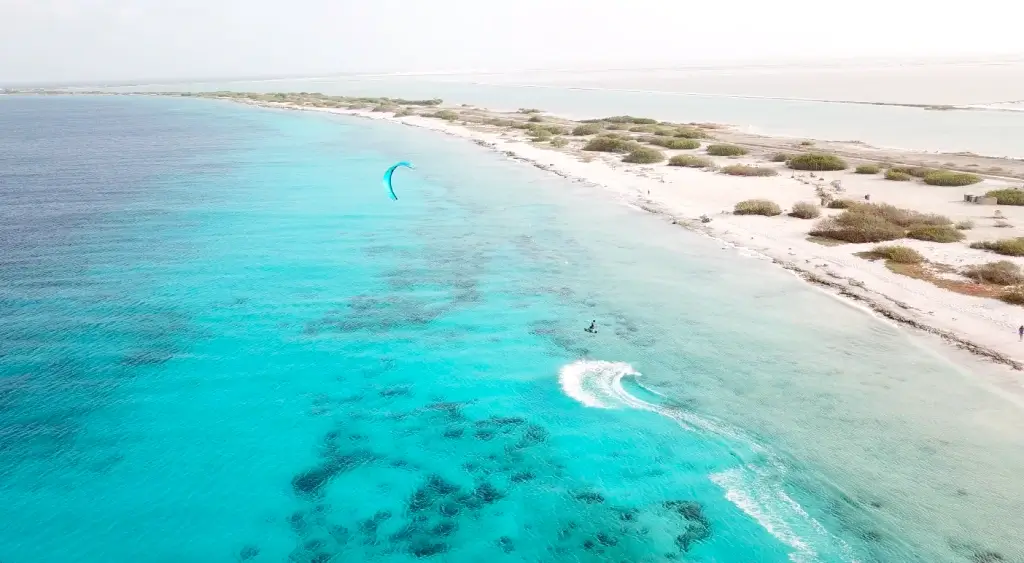
Skill Level: Beginner to Advanced | Water Type: Flat to light chop | Bottom: Sandy launch area with reef/rocky terrain beyond | Launch: Designated beach launch/landing corridor
If you’re searching for the best kitesurfing spots in Bonaire, Atlantis Beach should be first on your list. Also known as Kite Beach, it sits on the southwest coast and is the island’s established kitesurfing hub.
The reef helps keep the water comparatively flat, while the trade winds provide the consistency that makes Bonaire attractive for progression. Local operators report roughly 15–26 knots of steady trade wind and around 300 suitable wind days per year.
The combination works particularly well for riders who want to improve rather than simply survive a session. Beginners can take lessons with local instructors, while experienced kiters can work on freeride, jumps and freestyle technique.
One thing deserves special attention: wind direction and rescue planning. Current spot information describes the breeze as offshore or side-offshore and recommends taking advantage of local rescue support, particularly because the wind can become more offshore later in the day.
That makes Atlantis a place where “flat water” should never be interpreted as “risk-free.” If you’re learning, use a school. If you’re independent, understand the launch area, offshore wind and traffic before rigging.
Planning a session at de Atlantis Beach? Visit our Atlantis Beach Kitesurf Spot Guide for detailed information about wind directions, water conditions, launch areas, facilities and local restrictions.
🏄♂️ Offshore Water Beyond the 75-Meter Zone
Skill Level: Advanced | Water Type: Open Caribbean water | Bottom: Variable reef/open-water terrain | Launch: Not a conventional beach launch
The second option isn’t really a beach spot—and that’s precisely why it needs to be explained.
STINAPA permits kite and windsurf activity in appropriate dark-blue offshore water at least 75 meters from shore, outside the restricted nearshore marine-park areas. That opens possibilities for experienced riders who understand navigation, self-rescue and local marine conditions.
Think of this as an advanced riding zone rather than a destination beach. You should not interpret the 75-meter rule as permission to launch from whichever beach looks attractive. Launching and landing remain governed by local zoning, and STINAPA specifically identifies Atlantis as the designated marine-park entry/exit area.
For most visitors, therefore, Atlantis remains the practical answer. Offshore riding becomes interesting when you already have strong upwind ability, reliable self-rescue skills and a clear understanding of local restrictions.
🏄♂️ Pink Beach
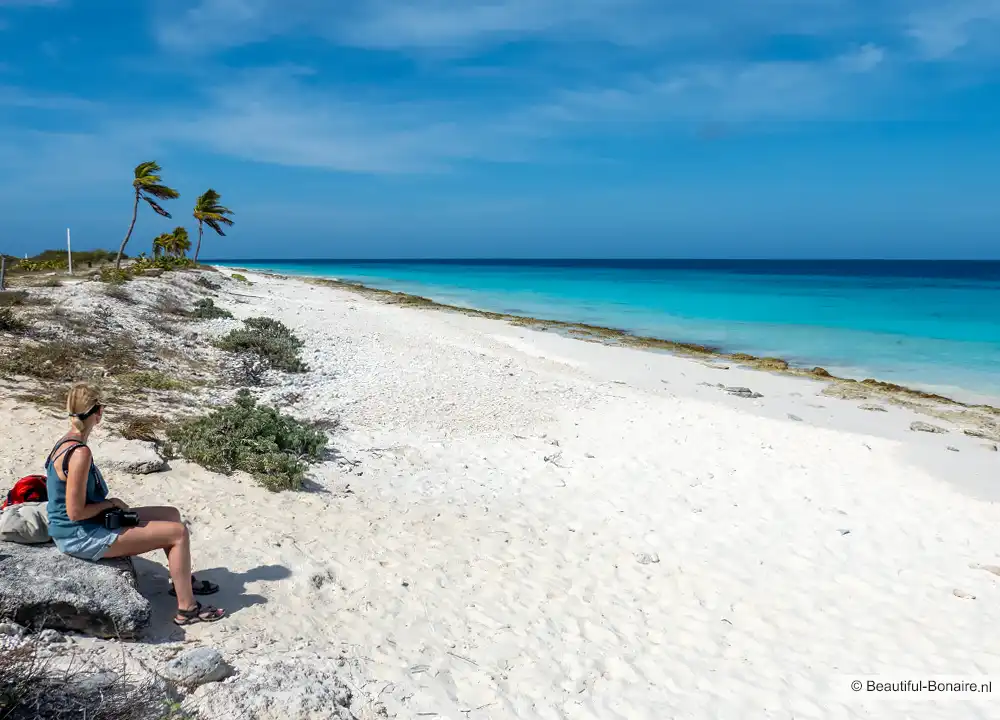
Skill Level: Do not treat as a normal kite launch | Water Type: Reef/open water | Bottom: Coral/reef | Launch: No designated kitesurf launch
Pink Beach regularly appears in older or informal kitesurfing guides, but current local information says kitesurfing is not allowed there within the marine park.
The same caution applies to Red Slave and other unofficial locations. A place appearing on an old spot map does not automatically mean it remains a legal launch today.
🏄♂️ Lac Bay
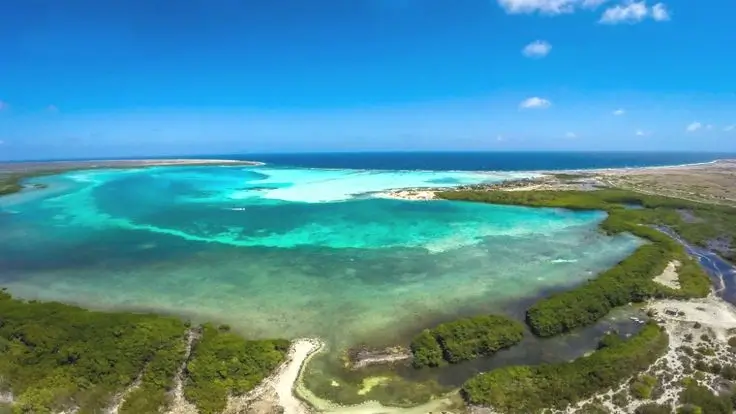
Skill Level: Not applicable for kitesurfing | Water Type: Shallow flat lagoon | Bottom: Shallow sandy/lagoon bottom | Launch: Windsurf/wingfoil area, not a kite launch
Lac Bay is world-class—but for windsurfing and wingfoiling, not kitesurfing. Its shallow, protected water is exactly what makes it famous, while also creating safety and environmental concerns for kite lines and crashes.
Planning Your Bonaire Kite Trip
Nature Fee and marine-park rules
Before getting on the water, check the current STINAPA Nature Fee requirements. Current tourism guidance lists a USD 40 annual Nature Fee for water activities, including kitesurfing, for applicable visitors aged 13 and over.
Rules can change, so verify them directly with STINAPA before your trip.
Getting around
A rental car makes a Bonaire kite holiday considerably easier. Atlantis is roughly a short drive from Kralendijk, while Lac Bay is on the opposite side of the island. Having your own transport also gives you flexibility when conditions change.
Respect the reef
Bonaire’s marine environment is the reason the island is so special. Don’t drag equipment across coral, don’t enter restricted zones, and give divers, snorkelers and boats plenty of space. The best Bonaire kiteboarding session is one that leaves the reef exactly as you found it.
Quick Takeaways
- Atlantis Beach is the primary designated kitesurfing launch location.
- Bonaire’s northeast trade winds provide a long riding season.
- Lac Bay is for windsurfing/wingfoiling, not kitesurfing.
- Pink Beach and other unofficial beaches should not be treated as legal kite launches.
- Experienced riders can use permitted offshore water subject to the 75-meter rule.
- Offshore wind makes local knowledge and rescue planning especially important.
- Check current STINAPA kitesurfing rules before every trip.
FAQs
What is the best kitesurfing spot in Bonaire?
Atlantis Beach/Kite Beach is the clear choice for most riders because it has the designated beach launch, established kite schools, flat water and consistent trade winds.
Can you kitesurf at Lac Bay?
No. Kitesurfing at Lac Bay is currently prohibited. The lagoon is designated for windsurfing, with wingfoiling also addressed separately under current regulations.
When is the best time to kitesurf in Bonaire?
December through August offers the broadest attractive season, with March through July particularly appealing for riders seeking reliable trade winds. May and June are among the strongest months climatologically.
Is Bonaire good for beginner kitesurfers?
Yes—Atlantis Beach can be suitable for beginners when learning with an experienced instructor. The combination of relatively flat water and established kite schools makes it a practical progression spot.
Do I need a Nature Fee to kitesurf in Bonaire?
Current guidance says applicable watersports users need the STINAPA Nature Fee, currently listed at USD 40 per calendar year. Always check the latest official rules before riding.
Conclusion
The biggest mistake you can make when researching the best kitesurfing spots in Bonaire is assuming that every beautiful turquoise-water location is available to kiters. Bonaire is different. Its marine environment is heavily protected, and current zoning makes Atlantis Beach the obvious center of the island’s kitesurfing scene.
For most riders, that isn’t a disadvantage. Atlantis offers what matters: reliable Caribbean trade winds, warm water, relatively flat conditions, a dedicated launch area, experienced kite schools and a community of riders who understand the local environment.
Advanced kiters can consider permitted offshore water beyond the 75-meter boundary, but that is a different proposition from simply driving to another beach and launching. Meanwhile, famous locations such as Lac Bay and Pink Beach should be appreciated for what they actually are—not treated as unofficial kite spots.
So pack your kite, rent a car, bring serious sun protection, and check the current STINAPA rules before your first session. If you’ve ridden Bonaire, what’s your favorite setup at Atlantis—and what kite size did you use?
Help Fellow Kiters
Have you kitesurfed Bonaire recently? Share your experience below—especially your observations about wind strength, water conditions and what beginners should know before their first Atlantis session. If this guide helped you plan a trip, share it with the next rider heading for the Caribbean.