

Best Kitesurfing Spots in Mũi Né

Mũi Né, located in Vietnam, about 200km and 4.5 hours of driving from Ho Chi Minh City is renowned as one of the world’s premier kitesurfing destinations. This coastal region offers optimal wind and weather conditions suitable for kitesurfers of all skill levels.
Noteworthy features include consistent and robust winds that facilitate practice and skill enhancement. Kitesurfing enthusiasts can relish in the expansive sandy beaches and crystal-clear waters, creating an idyllic backdrop for their endeavors.
Moreover, Mũi Né boasts various popular kitesurfing spots such as Harbour Wall, The Cemetery, Malibu, Suoi Nuoc, Turtle Island, and Phan Rang. These locations cater to diverse preferences by offering a range of conditions from flat water to waves.
Additionally, visitors can explore the area’s captivating landscapes comprising sand dunes and fishing villages via cycling or walking excursions. Kitesurfing schools are plentiful here for those seeking lessons or equipment rentals to augment their skills.
Accessing Mũi Né is conveniently achievable through several transportation options including buses and taxis.
Weather
The weather in Mũi Né is characterized by a tropical savanna climate, with high temperatures year-round and a distinct dry season from November to April. The best time to kite in Mũi Né is during the dry season when the wind patterns are most reliable and predictable.
Weather conditions during this time are typically sunny with clear skies, providing optimal visibility for kitesurfing activities. Mũi Né also has a vibrant local kite community, offering support, lessons, and guidance to both beginners and experienced riders.
Wind conditions
Wind conditions in Mũi Né are favorable for kitesurfing due to consistent and strong winds throughout the year. The area experiences predominantly cross-onshore winds blowing from the northeast, which provide ideal conditions for kitesurfers.
The average wind speed ranges between 15 to 25 knots, ensuring a thrilling ride on the water. Kite sizes of around 9 to 12 square meters are commonly used in this location, although it may vary depending on individual preference and skill level.
Water conditions
The wave conditions in Mũi Né can vary, but are generally calm with small to moderate waves, making it suitable for both beginners and experienced riders. During the windy season, you can expect more waves, especially further offshore.
The average water temperature in Mui Ne, Vietnam, typically ranges from around 26°C to 29°C (79°F to 84°F) throughout the year, making it suitable for water activities like kitesurfing, swimming, and other water sports.
🏄 Mũi Né Main Beach / Hàm Tiến
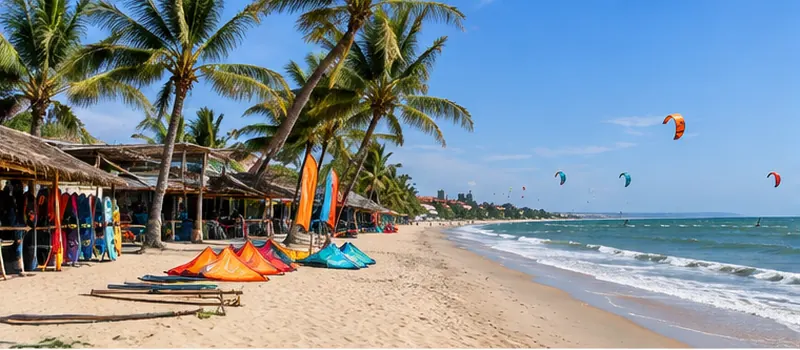
Skill Level: Beginner (with lessons), Intermediate, Advanced Water Type: Choppy, Waves Bottom: Sand Launch: Established kite-school areas along Hàm Tiến / Rạng Beach.
Mũi Né Main Beach is the centre of Vietnam’s kitesurfing scene. This long stretch of coastline is home to kite schools, equipment rental centres and beachfront accommodation.
During the northeast monsoon, cross-onshore winds build through the day, creating energetic freeride conditions. The water is usually choppy, with waves and shorebreak that become more challenging as the wind increases.
Beginners should learn with a qualified school rather than launch independently, especially during busy afternoons when the beach can become crowded.
Best Wind Season: November–April, particularly December–March.
Typical Wind Speed: Approximately 15–25 knots on suitable windy days.
Facilities: Kite schools, equipment rental, nearby restaurants and accommodation.
Important Local Rules & Safety: Use designated school launch corridors, keep clear of swimmers and account for strong shorebreak, changing tides and wind shadows near resorts.
Planning a session? Explore our Mũi Né Main Beach Spot Guide for launch details and riding conditions.
🏄 Harbour Wall
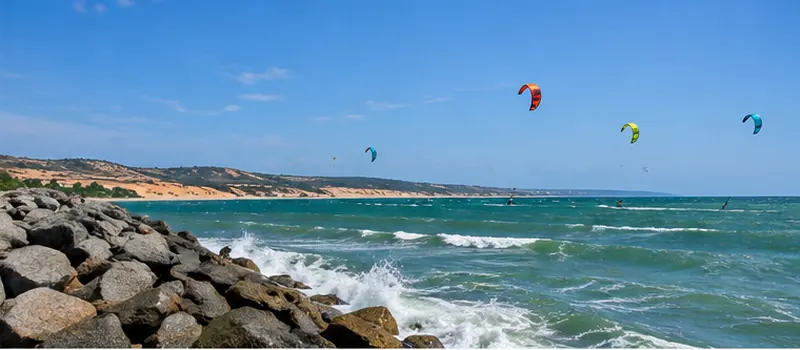
Skill Level: Advanced Water Type: Choppy, Waves Bottom: Sand and rocks near the breakwater Launch: Limited beach access near Mũi Né harbour; confirm the current safe launch locally.
Harbour Wall offers a more technical riding environment than Mũi Né’s main beach. Waves, changing water conditions and the proximity of the harbour breakwater make this a location for experienced kiteboarders.
The area is not a beginner training beach. Fixed structures, fishing activity and restricted launch space demand careful planning and strong kite control.
Before visiting, speak with a local kite operator to confirm that launching is currently possible and permitted.
Best Wind Season: November–April.
Typical Wind Speed: No reliable site-specific average confirmed.
Facilities: No dependable kite-specific facilities confirmed at the launch.
Important Local Rules & Safety: Stay well clear of the breakwater, fishing boats and harbour traffic. Do not assume dedicated rescue support is available.
Planning a session? Read our Harbour Wall Spot Guide for access considerations and safety information.
🏄 The Cemetery
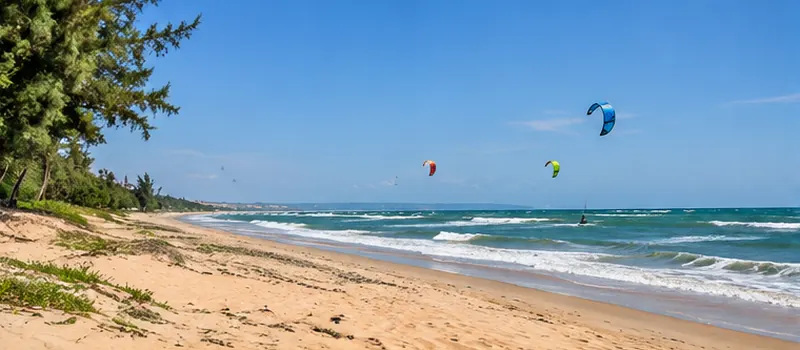
Skill Level: Advanced Water Type: Choppy, Waves Bottom: Sand with rocky sections Launch: Beach near the cemetery along the Mũi Né coastline; obtain local launch guidance.
The Cemetery is known among experienced riders as a challenging section of the Mũi Né coastline. Unlike the main kite-school beaches, it is associated with more exposed wave conditions and fewer convenient launch facilities.
This is a spot where reading the sea and managing difficult launches are especially important. Wind direction, wave size and nearby obstacles can make conditions unsuitable even for confident riders.
The area also has local fishing activity and culturally important surroundings that visitors should respect.
Best Wind Season: November–April.
Typical Wind Speed: No reliable site-specific average confirmed.
Facilities: No dependable kite-school or rental facilities confirmed at the launch.
Important Local Rules & Safety: Check for rocks, strong shorebreak, fishing gear and restricted beach access. Respect the cemetery and seek local advice before launching.
Planning a session? Visit our The Cemetery Spot Guide for launch and safety details.
🏄 Malibu / Hòn Rơm Beach
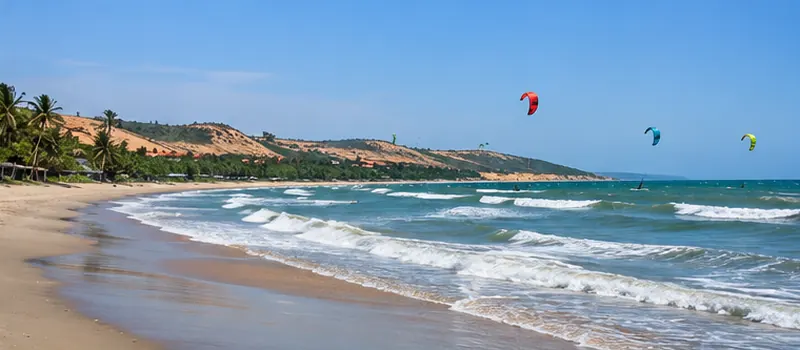
Skill Level: Intermediate, Advanced Water Type: Choppy, Waves Bottom: Sand, with occasional rocky areas Launch: Open sandy beach in the Malibu / Hòn Rơm / Gành area.
Malibu is a popular alternative to the busier central kite beach. The wider shoreline provides more space in suitable conditions, while the exposed coastline can deliver clean wind and energetic wave sessions.
Despite its spacious appearance, Malibu should not be considered a consistently flat-water beginner spot. Strong onshore wind, larger swell and shorebreak can make launching and returning to shore difficult.
Beginners should only ride here under professional supervision when conditions are appropriate.
Best Wind Season: November–April.
Typical Wind Speed: Approximately 15–25 knots on suitable windy days; conditions vary.
Facilities: Some nearby beach restaurants and accommodation. Dedicated rental or rescue services at the chosen launch are not guaranteed.
Important Local Rules & Safety: Watch for onshore wind, breaking waves and rocks. Choose a clear launch area and check conditions with local riders.
Planning a session? Explore our Malibu / Hòn Rơm Spot Guide for seasonal conditions and launch information.
🏄 Suối Nước Beach
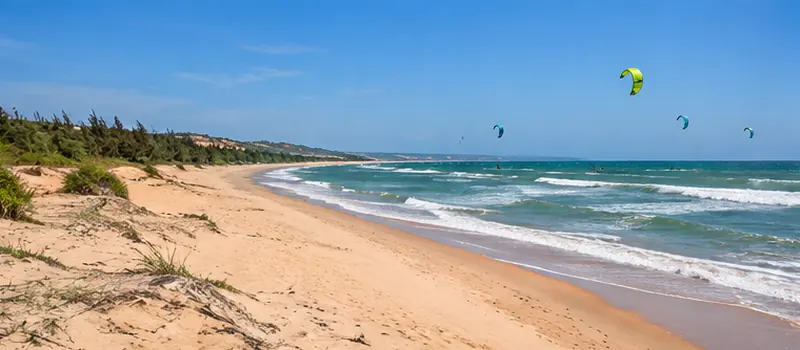
Skill Level: Intermediate, Advanced Water Type: Choppy, Waves Bottom: Sand Launch: Sandy sections of Suối Nước Beach, northeast of central Mũi Né.
Suối Nước is a quieter alternative for riders who prefer more open water and fewer kites than on the main Hàm Tiến beach.
The coastline receives predominantly onshore northeast monsoon winds during the main season. Waves and shorebreak can be significant, making the location more suitable for riders who are comfortable in exposed ocean conditions.
Beach access and kite support vary along the shoreline, so it is important to identify a suitable launch before travelling.
Best Wind Season: November–April.
Typical Wind Speed: Seasonal northeast monsoon winds; no reliable beach-specific average confirmed.
Facilities: Limited amenities along parts of the beach; some nearby restaurants and resorts.
Important Local Rules & Safety: Assess the onshore wind, shorebreak and beach access. Confirm any available rescue support and keep clear of swimmers.
Planning a session? Read our Suối Nước Beach Spot Guide for wind and access information.
🏄 Turtle Island
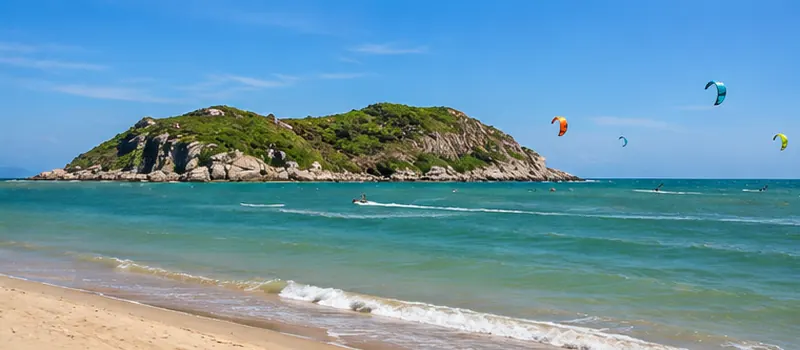
Skill Level: Intermediate, Advanced Water Type: Flat, Choppy, Waves Bottom: Sand with rocky patches Launch: Mainland beach opposite Turtle Island / Hòn Nghệ, not on the offshore islet.
Turtle Island is one of the more distinctive kite locations along the coast northeast of Mũi Né. Riders launch from the mainland, with a small rocky, vegetation-covered islet offshore.
The curved coastline creates a mix of conditions. Depending on the wind direction, riders may find relatively sheltered water in one area and chop or waves in another.
Wind can become gusty near the land, and the quieter setting means visitors should not assume that kite-school services or rescue boats are available.
Best Wind Season: November–April.
Typical Wind Speed: No reliable launch-specific average confirmed.
Facilities: No dependable kite-specific facilities confirmed at the mainland launch.
Important Local Rules & Safety: Check gusts, rocks, shallow water and fishing activity. Arrange suitable support and avoid treating the offshore island itself as the launch.
Planning a session? Visit our Turtle Island / Hòn Nghệ Spot Guide for launch information and safety considerations.
Kitesurfing Schools
Kitesurfing schools in Mũi Né offer a range of services to cater to both beginners and advanced riders. These schools provide comprehensive instruction on kiteboarding techniques, ensuring that students develop the necessary skills and knowledge to safely navigate the water.
Equipment rentals are available for those who do not have their own gear, allowing individuals to try out the sport before committing to purchasing their own equipment. Beginner lessons focus on teaching proper kite control, body positioning, and water starts, while advanced instruction delves into more complex maneuvers such as jumps and tricks.
Safety is also emphasized throughout the learning process, with instructors providing tips on how to assess wind conditions, react to emergencies, and avoid potential hazards. Whether you’re a novice or an experienced rider looking to refine your skills, kitesurfing schools in Mũi Né can provide this.
Other things to do
Visitors to Mũi Né have a wide range of activities to choose from, including exploring the scenic landscapes, indulging in delicious seafood, and immersing themselves in the local culture. Here are four additional options for visitors to consider:
- Local cuisine: Food enthusiasts can savor authentic Vietnamese dishes at the numerous restaurants in Mũi Né. From fresh seafood delicacies to traditional street food, there is something to please every palate.
- Water sports activities: With its favorable wind conditions and beautiful coastline, Mũi Né is a popular destination for water sports enthusiasts. Visitors can try their hand at kitesurfing, windsurfing, or jet skiing.
- Cultural attractions: For those interested in history and culture, there are several cultural attractions in Mũi Né such as ancient Cham towers and fishing villages that offer insights into the local way of life.
Additionally, Mũi Né provides shopping opportunities for tourists looking for unique souvenirs or handicrafts made by local artisans.
How to get there
When planning a trip to Mũi Né, it is important to consider the various transportation options available for reaching this coastal destination. The best transportation options include flying into Ho Chi Minh City and then taking a bus or taxi to Mũi Né, which is approximately 200 kilometers northeast of the city.
Another option is to take a train from Ho Chi Minh City to Phan Thiet, which is the closest train station to Mũi Né, and then take a taxi or local bus to the destination. There are also several recommended travel routes that offer scenic views along the way.
Once in Mũi Né, there are nearby accommodations ranging from luxury resorts to budget-friendly hotels. Popular tourist attractions in Mũi Né include the Harbour Wall, The Cemetery, Malibu Beach, Suoi Nuoc Beach, Turtle Island, and Phan Rang.
For dining options, visitors can enjoy a variety of local cuisine at restaurants and cafes located throughout the area.
Frequently Asked Questions
What Are the Best Months to Visit MũI Né for Kitesurfing?
The best months to visit Mũi Né for kitesurfing are from November to March due to the optimal weather conditions, consistent wind speeds, and moderate kite sizes. There are beginner-friendly spots with local instructors as well as advanced spots for experienced riders.
Are There Any Restrictions or Permits Required for Kitesurfing in MũI Né?
Permit requirements for kitesurfing in Mũi Né depend on beach access and local authorities. Safety guidelines and kiteboarding restrictions may be imposed to ensure the well-being of kitesurfers and other beachgoers.
Are There Any Specific Safety Measures or Precautions to Be Aware of While Kitesurfing in MũI Né?
Important safety measures and precautions while kitesurfing in Mũi Né include being aware of strong winds, using proper equipment, familiarizing oneself with local rescue services, and following a beginners guide for safe practices.
Are There Any Local Regulations Regarding Kiteboarding Equipment or Gear in MũI Né?
Local regulations in Mũi Né regarding kiteboarding equipment involve safety guidelines, gear requirements, and equipment restrictions. These regulations aim to ensure the safety of kitesurfers and may include rental options for those who do not have their own gear.
Are There Any Rental Options Available for Kitesurfing Equipment in MũI Né?
Kitesurfing rental options in Mũi Né are available, offering affordable equipment rentals. Rental rates and availability vary among popular rental shops. The quality of rental gear is generally reliable for kitesurfing enthusiasts seeking equipment in the area.