

Best Kitesurfing Spots in Indonesia

Indonesia is a kitesurfer’s dream—a vast archipelago brimming with crystal‑clear warm waters, diverse wind conditions, and legendary wave breaks. From Bali’s iconic lagoons to Sulawesi’s wind-farm-powered shores and the hidden gems of Lombok and Sumbawa, this guide dives deep into the best kitesurfing spots in Indonesia.
This guide covers the best places to kite in Indonesia. You’ll find tips on wind seasons, skill levels, travel, and local customs. Whether you like flatwater tricks or wave riding, this guide helps you plan the right trip. If you want wind and adventure, Indonesia delivers both.
Why Indonesia is a Kitesurfing Paradise
Archipelago of Endless Variety
With over 17,000 islands, Indonesia offers everything from reef‑protected lagoons to open‑ocean swells.
Tropical Climate & Warm Waters
Year-round sea temps hover between 25–30 °C, allowing for minimal gear even in the windier months.
Rich Kite Culture & Facilities
Spots like Bali, Lombok, and Sulawesi have well-established kite schools, rentals, and experienced communities. These places have some of the best kiteboarding spots in Indonesia.
When to Go: Seasons & Wind Patterns
Dry Season: May–October
- Prevailing SE and southwesterly trade winds (15–25 knots)
- Consistent sunshine and smooth thermals
Wet Season: November–April
- Less reliable winds (with exceptions in Northern Sumatra and Sulawesi)
- Expect sudden downpours and stormy seas
🏄♂️ Sanur / Mertasari Beach, Bali
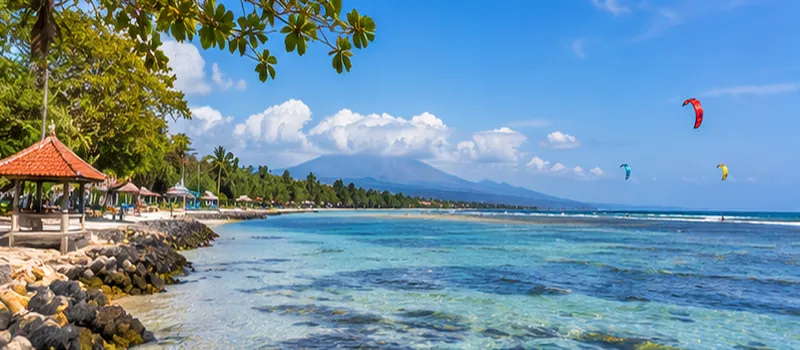
Skill Level: Beginner, Intermediate, Advanced | Water Type: Flat, Choppy | Bottom: Sand with coral patches | Launch: Established kiteboarding area near Pura Mertasari, Sanur.
Sanur is Bali’s most established kitesurfing destination. Its reef-protected lagoon offers relatively flat to choppy water, making it a popular choice for lessons, freeriding and progression.
The main season runs from May to September, when easterly and southeasterly trade winds provide regular riding opportunities. Wind strength is often moderate rather than exceptionally strong.
Water depth changes significantly with the tide. At low tide, coral patches and shallow sections can make riding difficult or unsafe. The outer reef, boats and other water users also require attention.
Best Wind Season: May–September.
Typical Wind Speed: Approximately 10–18 knots on suitable days.
Facilities: Parking, kite schools, equipment rental and nearby beach restaurants.
Important Local Rules & Safety: Use established kiteboarding areas. Check tidal depth, coral hazards, boat traffic and rescue arrangements with a local school before launching.
Planning a session at Sanur? Visit our Sanur / Mertasari Beach Kitesurf Spot Guide.
🏄 Nusa Dua / Geger Beach, Bali
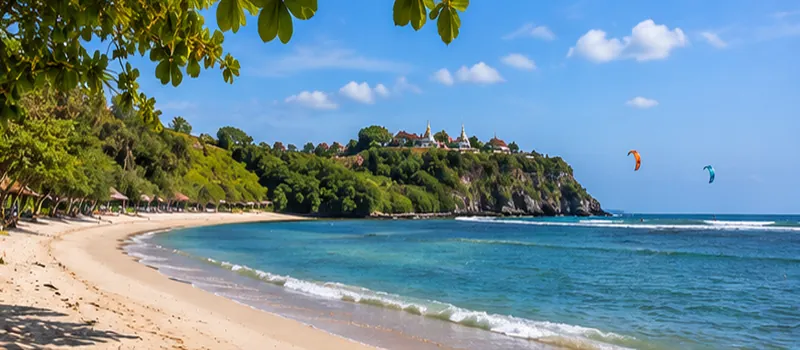
Skill Level: Intermediate, Advanced | Water Type: Flat, Choppy, Waves | Bottom: Sand and Coral Reef | Launch: Limited sandy launching area at Geger Beach.
Geger Beach offers an alternative to Sanur, with a smaller reef-protected lagoon and breaking waves farther offshore.
The main riding season generally runs from May to October. Winds are often relatively light, making kite selection and timing important.
The main challenge is the launch. Beach space can be limited, with swimmers, resort guests and other visitors sharing the shoreline. Shallow coral becomes particularly hazardous as the tide drops.
No dedicated kiteboarding rescue service has been confirmed at Geger, so independent riders need appropriate experience and a reliable safety plan.
Best Wind Season: May–October, particularly June–August.
Typical Wind Speed: Approximately 11–16 knots during suitable conditions.
Facilities: Parking and nearby beach restaurants. No dedicated kite school or rental service confirmed at the launch.
Important Local Rules & Safety: Respect swimming areas, local beach instructions, resort boundaries and temple grounds. Check the tide and avoid launching when there is insufficient space.
Planning a session at Nusa Dua? Explore our Nusa Dua / Geger Beach Kitesurf Spot Guide.
🏄 Kaliantan Beach, Lombok
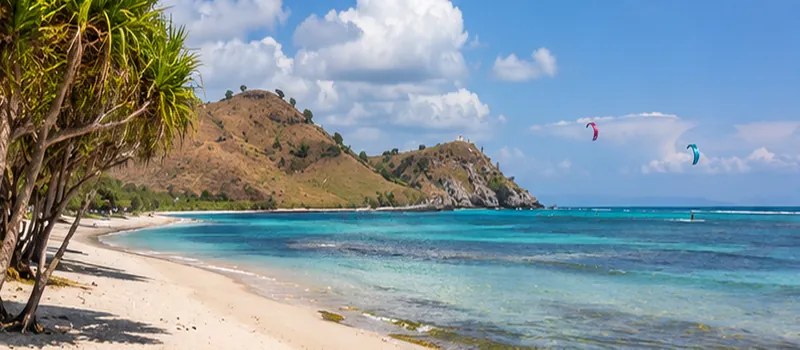
Skill Level: Intermediate, Advanced | Water Type: Flat, Choppy, Waves | Bottom: Sand and Coral Reef | Launch: Established kiteboarding beach area near Kaliantan Lagoon.
Kaliantan Beach, on southeastern Lombok, is known for its beautiful coastline, seasonal trade winds and reef-protected lagoon.
The lagoon can offer relatively flat water for freeriding and progression, while waves break along the outer reef. Conditions depend heavily on the tide, and very shallow water can expose coral.
Kaliantan is more remote than Bali’s established kite beaches. Visitors should arrange equipment, transport and local guidance before travelling.
Best Wind Season: May–September.
Typical Wind Speed: Approximately 15–25 knots on suitable windy days.
Facilities: Kite instruction and equipment rental may be arranged through local operators; confirm availability before arrival.
Important Local Rules & Safety: Check water depth and coral exposure. Avoid unfamiliar reef channels and confirm rescue arrangements before riding offshore.
Planning a session at Kaliantan? Read our Kaliantan Beach Kitesurf Spot Guide.🏄 Ekas Bay – Best for Exploring Southeast Lombok.
🏄 Ekas Bay, Lombok
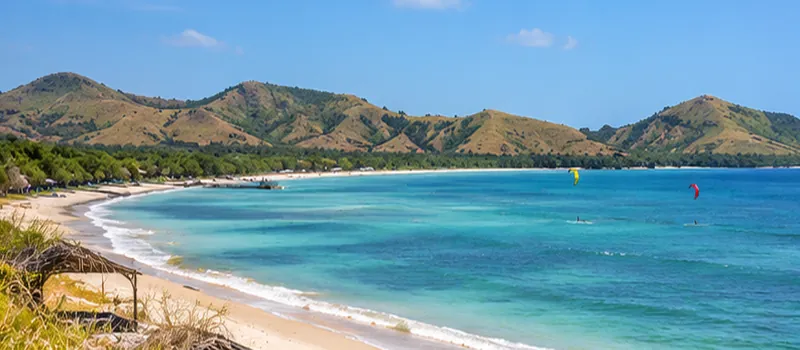
Skill Level: Intermediate, Advanced | Water Type: Flat, Choppy | Bottom: Sand with Reef Patches | Launch: Operator-selected launching area in the Ekas region.
Ekas Bay is a scenic destination on southeastern Lombok, surrounded by hills, traditional villages and sheltered coastal waters.
The wider Ekas area attracts kitesurfers during the dry-season trade winds, particularly between May and September. Local operators can help visitors identify suitable launching locations.
However, Ekas Bay should not be treated as one uniformly rideable lagoon. Conditions vary between different beaches, and the operator’s meeting point may not be the actual launch.
Tides, shallow reef sections and the availability of local support are important considerations.
Best Wind Season: May–September.
Typical Wind Speed: No reliable launch-specific average confirmed.
Facilities: Arrange kite instruction, rental and transport through a local operator. Facilities at the exact launch may be limited.
Important Local Rules & Safety: Confirm the precise launch, access arrangements, tidal depth and rescue support before travelling.
Planning a session at Ekas Bay? Visit our Ekas Bay Kitesurf Spot Guide.
🏄 Jeneponto, Sulawesi
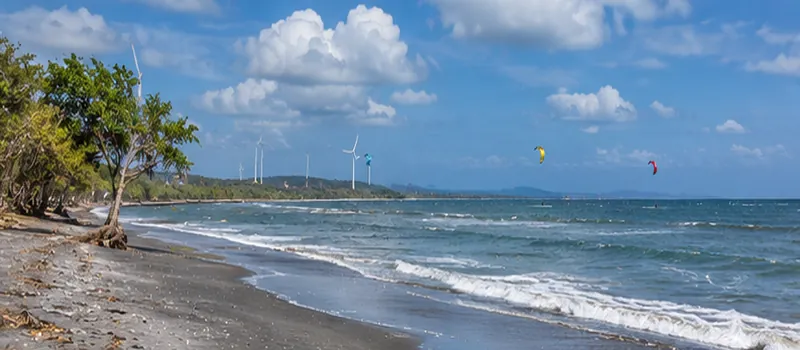
Skill Level: Intermediate, Advanced | Water Type: Choppy | Bottom: Mixed Coastal Shallows | Launch: Exact current kiteboarding launch requires local verification.
Jeneponto is a windy coastal region in South Sulawesi, known for its exposed shoreline and seasonal winds.
The region offers potential for adventurous kitesurfers looking beyond Indonesia’s better-established destinations. However, reliable information about the exact public launch, equipment rental and rescue services remains limited.
For that reason, Jeneponto is best regarded as an exploratory destination rather than a fully established kiteboarding centre.
Riders should obtain local guidance and assess wind direction, fishing activity, obstacles and access before considering a session.
Best Wind Season: Generally June–September, subject to local confirmation.
Typical Wind Speed: No reliable launch-specific average verified.
Facilities: No dedicated facilities confirmed at a specific launch.
Important Local Rules & Safety: Confirm current access and launch conditions locally. Do not assume that equipment rental, lessons or rescue support are available.
Planning a session at Jeneponto? Explore our Jeneponto Kitesurf Spot Guide.
🏄 Pulau Tabuhan, Java
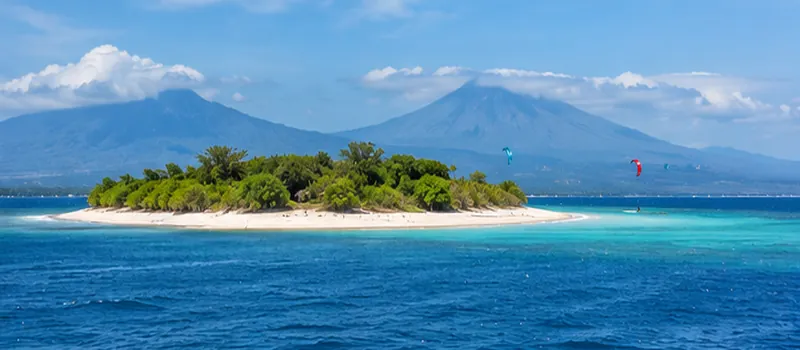
Skill Level: Intermediate, Advanced | Water Type: Flat, Choppy | Bottom: Sand with Coral Patches | Launch: Suitable sandy shoreline on Pulau Tabuhan, reached by boat from the Banyuwangi coast.
Pulau Tabuhan is a small tropical island off East Java, near Banyuwangi. Its turquoise water, sandy beaches and seasonal winds make it one of Indonesia’s more distinctive kitesurfing destinations.
The island offers an attractive setting for freeriding, with relatively smooth water in some areas and wind-driven chop in more exposed sections.
The main wind season generally runs from May into November, although actual riding conditions depend on wind direction, tide and weather.
Because the island is reached by boat, visitors must arrange transport, equipment and return logistics in advance. Facilities are limited, and independent rescue assistance should not be assumed.
Best Wind Season: May–November.
Typical Wind Speed: No reliable island-specific average verified.
Facilities: Limited on-island facilities. Arrange boat transport and kite support through a local operator.
Important Local Rules & Safety: Confirm boat transfers, launching access and recovery arrangements. Watch for coral, changing currents and offshore drift.
Planning a session at Pulau Tabuhan? Visit our Pulau Tabuhan Kitesurf Spot Guide.
Conclusion
Indonesia offers some of the most exciting, diverse, and warm-water kitesurfing opportunities on the planet. From freestyle in flat lagoons to powerful reef breaks, this tropical wonderland is a kiteboarding bucket-list destination.
With reliable trade winds, accessible travel hubs, and world-class kite culture, the islands of Indonesia cater to all levels of kitesurfers. So whether you’re planning your first overseas kite trip or chasing your next high-adrenaline session, Indonesia has your wind.
FAQs
1. When is the best time to kitesurf in Indonesia?
May to October, when the dry season delivers steady SE trade winds across most islands.
2. Which Indonesian spots are best for beginners?
Try Sanur (Bali) or Kaliantan Lagoon (Lombok)—flatwater and schools available.
3. Should I bring my own gear?
It helps, but rentals are available in Bali, Lombok, and Sulawesi. Always bring your own harness and booties.
4. Can I island-hop with my gear?
Yes! Use domestic flights or ferries to connect from Bali → Lombok → Sumbawa or Sulawesi.
5. Is reef protection necessary?
Yes—booties and careful launching/landing are essential at reef-heavy spots like Lakey Peak and Kaliantan.