

Best Kitesurfing Spots In Mauritius

Are you ready to soar through the air, harnessing the power of the wind and feeling the rush of adrenaline? Look no further than Mauritius, a paradise for kitesurfing enthusiasts like yourself. With its ideal wind conditions and favorable climate, this island boasts some of the best kitesurfing spots in the world.
Picture yourself gliding across crystal-clear waters, surrounded by stunning landscapes that take your breath away. Feel the thrill as you conquer challenging waves and ride strong winds at spots like Le Morne and One Eye.
If you’re just starting out, don’t worry—there are plenty of kitesurf schools with expert instructors to guide you on your journey to mastery. And when it’s time to rest after an exhilarating day on the water, Mauritius offers a range of hotels that cater to kitesurfers like yourself.
Get ready to experience pure bliss as you explore the best kitesurfing spots in Mauritius. Le Morne and One Eye are considered among the best kitesurfing spots in Mauritius. Located on the southwestern coast of the island,
Le Morne offers pristine turquoise waters and a stunning backdrop of mountains. It is a haven for kitesurfers of all levels, from beginners to experts. The shallow lagoon provides the perfect conditions for learning and practicing tricks.
One Eye, on the other hand, is known for its challenging waves that can reach up to 10 meters high. This spot attracts experienced kitesurfers who seek an adrenaline rush. The powerful waves make it an exciting destination for those looking to push their limits and ride with skill.
If you’re planning a kitesurfing trip to Mauritius, it’s essential to come prepared with the right equipment. Make sure you have a suitable kite size based on wind conditions and your skill level.
Additionally, safety should always be a priority when engaging in this extreme sport. Familiarize yourself with safety tips before hitting the water. The best time to visit these spots is during Mauritius’ windy season, which generally runs from May to October.
During this period, winds are consistent and reliable, offering ideal conditions for kitesurfing. Lastly, don’t miss out on connecting with the local kitesurfing community while in Mauritius. They can provide valuable insights into lesser-known spots and offer guidance if needed.
Now let’s dive into the next section about wind conditions…
Wind conditons
When it comes to kitesurfing in Mauritius, the wind conditions are absolutely crucial for a thrilling and exhilarating experience. Here are three key factors that make the wind conditions in Mauritius perfect for kitesurfing:
- Consistent Trade Winds: The island is blessed with consistent trade winds blowing from the southeast direction, providing steady and reliable wind for kitesurfers. These winds create ideal conditions for practicing various kitesurfing techniques and tricks.
- Optimal Wind Strength: The average wind speed ranges from 15 to 25 knots, which is perfect for both beginners and advanced riders. This allows you to easily control your kite and perform jumps or maneuvers with ease.
- Ideal Wind Directions: The predominant cross-onshore wind direction ensures that you have enough space to ride safely without worrying about being blown out to sea. It also creates smooth waves and flat water spots, making it easier to master different kitesurfing techniques.
To fully enjoy these excellent wind conditions, it’s important to take safety precautions such as wearing appropriate protective gear and checking weather forecasts regularly. The best time to kitesurf in Mauritius is during the windy season from May to October when the trade winds are at their strongest.
Now that we’ve covered the wind conditions, let’s move on to discussing the weather patterns in Mauritius.
Weather
Get ready to experience the incredible weather in Mauritius, where you can soak up the sun and enjoy ideal conditions for kitesurfing. The climate in Mauritius is tropical, with warm temperatures throughout the year.
The island has two main seasons: summer and winter. Summer, which runs from November to April, is characterized by hot and humid weather, with temperatures averaging around 30 degrees Celsius (86 degrees Fahrenheit). Winter, from May to October, brings cooler temperatures ranging between 20 to 25 degrees Celsius (68 to 77 degrees Fahrenheit).
Rainfall in Mauritius is influenced by monsoons. From November to April, the island experiences a wet season with heavy rainfall and occasional cyclones. However, it’s worth noting that rain showers are usually short-lived and followed by sunny skies. On the other hand, from May to October, Mauritius enjoys a drier period with less rainfall.
When it comes to wind speed and direction for kitesurfing enthusiasts, you’re in luck! The southeast trade winds blow consistently from May to November at around 15-20 knots (17-23 mph), providing perfect conditions for thrilling rides on the waves.
The best time to visit Mauritius for kitesurfing is during its winter months when strong winds prevail. Le Morne is one of the most popular spots on the island due to its consistent wind conditions and crystal-clear waters. So get ready for an exhilarating adventure as we dive into all that Le Morne has to offer!
🏄 Le Morne
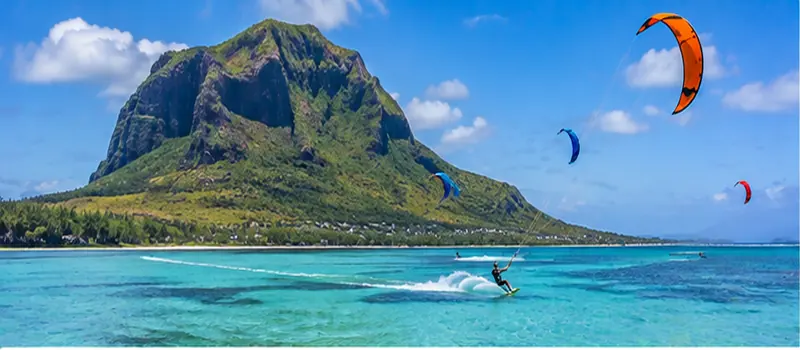
Skill Level: Beginner, Intermediate, Advanced | Water Type: Flat, Choppy | Bottom: Sand with coral patches | Launch: Established kiteboarding area at Le Morne Kite Beach.
Le Morne is Mauritius’ most famous kitesurfing destination, combining a beautiful turquoise lagoon with reliable southeasterly trade winds and the dramatic backdrop of Le Morne Brabant mountain.
The lagoon offers relatively shallow, flat-to-choppy water, making it ideal for lessons, freeriding and freestyle progression. Several kite schools operate around the main kite beach, and riders of different abilities can enjoy the spot when conditions are appropriate.
The best wind generally arrives between May and October, with June through September particularly popular. The mountain can accelerate the wind, so conditions may be stronger than elsewhere on the island.
Although the lagoon looks inviting, it is not hazard-free. Coral heads, changing tidal depth, busy launch areas and reef channels require attention. Beginners should stay within the appropriate lagoon areas and avoid drifting toward the outer reef.
Best Wind Season: May–October.
Typical Wind Speed: Approximately 15–25 knots during suitable trade-wind conditions, sometimes stronger.
Facilities: Parking, kite schools and equipment rental at established Le Morne kiteboarding locations.
Important Local Rules & Safety: Respect kite schools, swimmers and other lagoon users. Check coral depth at low tide, maintain safe launching distances and avoid reef passes without local knowledge.
Planning a session at Le Morne? Visit our Le Morne Lagoon Kitesurf Spot Guide for wind conditions, launch information and safety advice.
🏄 One Eye
Skill Level: Advanced (Expert Only) | Water Type: Waves | Bottom: Sharp Coral Reef | Launch: Access via the Le Morne kiteboarding area and an appropriate reef channel, not directly from a beach at One Eye.
One Eye is one of the most legendary kitesurfing waves in the Indian Ocean. Located outside the Le Morne lagoon, this powerful left-hand reef break attracts highly experienced wave riders from around the world.
Unlike the sheltered lagoon nearby, One Eye delivers fast, hollow waves breaking over extremely shallow coral. Its combination of powerful surf, exposed conditions and sharp reef makes it a genuinely expert-only destination.
The southeasterly trade winds can produce excellent wave-riding conditions between May and October. However, the wind angle, swell size, tide and reef exposure must all be assessed before attempting a session.
Riders must be completely independent, capable of handling large breaking waves and prepared for difficult self-rescue. Rescue assistance should never be assumed.
Best Wind Season: May–October.
Typical Wind Speed: Approximately 18–30 knots on suitable trade-wind days; conditions vary considerably.
Facilities: No facilities directly at the reef break. Services at Le Morne do not guarantee rescue coverage at One Eye.
Important Local Rules & Safety: Expert riders only. Extremely shallow coral, strong waves, currents and exposed conditions create serious risks. Obtain local guidance, confirm reef access and establish a rescue plan before riding.
Planning a session at One Eye? Explore our One Eye Reef Kitesurf Spot Guide for reef conditions, access details and essential safety information.
🏄 Bel Ombre
Skill Level: Intermediate, Advanced | Water Type: Flat, Choppy, Waves | Bottom: Sand with coral and reef sections | Launch: Established operator-assisted kiteboarding areas around Bel Ombre, including the C Beach Club vicinity where permitted.
Bel Ombre is an attractive alternative to the busy Le Morne coastline. Situated on Mauritius’ southern shore, it combines tropical scenery, a sheltered lagoon and access to more demanding reef conditions farther offshore.
The lagoon can provide enjoyable freeriding and progression opportunities, while experienced riders may explore waves near the outer reef when conditions allow.
Bel Ombre generally works well with southeasterly and southerly trade winds. However, the wind near the beach can be gusty, and some launching areas are relatively narrow.
Coral formations and changing water depth make careful route selection important. The offshore reef should not be approached without local guidance.
Best Wind Season: April–November, with the strongest trade-wind period generally in the middle of the year.
Typical Wind Speed: Approximately 15–25 knots during suitable conditions.
Facilities: Kite instruction and rental services are available through established local operators; confirm access and operating arrangements before visiting.
Important Local Rules & Safety: Respect resort and operator access arrangements. Launch only where permitted, watch for gusts and coral at low tide, and avoid riding the offshore reef alone.
Planning a session at Bel Ombre? Read our Bel Ombre Kitesurf Spot Guide for wind conditions, launch details and local precautions.
🏄 Pointe d’Esny
Skill Level: Beginner, Intermediate, Advanced | Water Type: Flat, Choppy | Bottom: Sand with coral patches | Launch: Suitable public-access sandy sections at Pointe d’Esny, subject to local access arrangements.
Pointe d’Esny is a beautiful lagoon destination on Mauritius’ southeastern coast, near Mahébourg and Blue Bay.
Its expansive turquoise water and relatively protected setting make it attractive for freeriding, foilboarding and improving kite control. Depending on the wind and tide, conditions range from smooth lagoon water to moderate chop.
The spot is particularly interesting when easterly winds make other parts of the island less favorable. During the main trade-wind season, the southeast coast can provide enjoyable sessions for a range of riders.
However, not every section of the beach is suitable for launching. Private beachfront properties, trees, shallow coral and changing tidal depth can complicate access.
Beginners should seek local instruction or supervision rather than assuming the entire lagoon is suitable for independent learning.
Best Wind Season: May–October, with additional opportunities outside the main season depending on wind direction.
Typical Wind Speed: Approximately 12–22 knots on suitable riding days.
Facilities: Dedicated kite facilities at the exact launch are not confirmed. Arrange lessons or equipment through a verified local provider.
Important Local Rules & Safety: Respect private property, beach users and sensitive lagoon areas. Check coral depth and tide, and use only suitable, permitted launching locations.
Planning a session at Pointe d’Esny? Visit our Pointe d’Esny Kitesurf Spot Guide for wind conditions, launch information and local safety guidance.
🏄 Belle Mare
Skill Level: Intermediate, Advanced | Water Type: Flat, Choppy | Bottom: Sand with coral and reef patches | Launch: Unobstructed sandy sections of Belle Mare Beach where kitesurfing access is permitted.
Belle Mare is famous for its long white-sand beaches, turquoise lagoon and beautiful east-coast scenery. It is also a possible kitesurfing destination when the southeasterly trade winds are blowing.
The lagoon can offer enjoyable freeriding, with relatively flat sections and wind-driven chop depending on the conditions. Its wide coastal setting makes it visually spectacular, although the actual launching space varies considerably along the beach.
Belle Mare receives seasonal trade winds, particularly between May and October, with some opportunities extending into November.
Riders should be aware that hotels, swimming areas and coastal trees can limit suitable launching locations. The presence of a long sandy beach does not mean that every section is safe or permitted for kitesurfing.
Shallow coral patches, reef areas and changing wind conditions also require care.
Best Wind Season: May–November, with the most dependable trade winds generally during the middle of the year.
Typical Wind Speed: Approximately 12–22 knots on suitable trade-wind days.
Facilities: Dedicated kite facilities at the exact launch are not confirmed. Hotels and other visitor services nearby should not be assumed to provide kite-specific facilities.
Important Local Rules & Safety: Avoid resort swimming zones and crowded beach sections. Check for trees, gusty wind, shallow coral and suitable beach access before launching.
Planning a session at Belle Mare? Read our Belle Mare Kitesurf Spot Guide for wind conditions, launch information and safety considerations.
🏄 Anse la Raie
Skill Level: Intermediate, Advanced | Water Type: Flat, Choppy | Bottom: Sand with coral patches | Launch: Established lagoon kiteboarding access at Anse la Raie, subject to local wind and beach conditions.
Anse la Raie is one of northern Mauritius’ best-known kitesurfing areas. Its lagoon, reef scenery and quieter atmosphere offer a different experience from the busy southern beaches.
The water can be relatively flat inside the lagoon, while more exposed sections become choppy when the wind strengthens. Experienced riders can enjoy freeriding and exploring the northern coastline.
Unlike Le Morne, Anse la Raie does not have exactly the same ideal wind season. The northern coast can offer favorable sessions during transitional and early summer months, while winter winds may be gusty or poorly aligned at the launch.
The main practical challenge is launching safely. Some areas have limited beach space and trees close to the water, making kite handling difficult.
For this reason, independent beginners should not treat Anse la Raie as an automatically easy lagoon spot.
Best Wind Season: April–May and November–January are useful periods to investigate; check the forecast and wind direction carefully.
Typical Wind Speed: Variable, often approximately 12–22 knots on rideable days. This is an indicative range, not a measured monthly average.
Facilities: Permanent kite-specific facilities at the exact launch are not confirmed.
Important Local Rules & Safety: Limited launching space and nearby trees can create turbulence. Launch and land with assistance, avoid unsuitable offshore wind directions, and respect reef areas and other water users.
Planning a session at Anse la Raie? Explore our Anse la Raie Kitesurf Spot Guide for wind conditions, launch access and safety information.
Kitesurf schools
If you’re looking to take your kitesurfing skills to the next level, La Preneuse in Mauritius is a must-visit spot. But before you hit the waves, it’s important to find the right kitesurf school that can guide you through the process.
These schools offer expert instructors who can teach you various kiteboarding techniques and help you improve your skills. When choosing a kitesurf school, consider factors like their experience, reputation, and safety measures they have in place.
Look for schools that provide well-maintained equipment and prioritize safety at all times. They should also offer lessons tailored to different skill levels, from beginners to advanced riders.
In addition to learning basic techniques, these schools can also teach you advanced tricks that will impress even the most seasoned riders. They will guide you on how to choose the right equipment based on your skill level and preferences.
The best time to learn kitesurfing in La Preneuse is during the summer months when steady winds prevail. However, it’s still possible to enjoy this thrilling sport throughout the year thanks to favorable wind conditions.
Frequently Asked Questions
Are there any specific safety precautions that kitesurfers should be aware of when kitesurfing in Mauritius?
When kitesurfing in Mauritius, it’s crucial to prioritize safety. Always wear essential gear, such as a harness and helmet. Be aware of common injuries like sprains or cuts. Follow safety rules, consider weather conditions, and get proper training to ensure a smooth ride.
What are some nearby attractions or activities that kitesurfers can enjoy when visiting Le Morne?
When visiting Le Morne, you’ll find a plethora of nearby attractions and activities to enjoy. From exploring the hiking trails and cultural experiences to encountering wildlife or indulging in various water activities, there is something for everyone.
Can you recommend any beginner-friendly kitesurfing spots in Mauritius?
Looking to start kitesurfing in Mauritius? Check out beginner-friendly spots like Belle Mare and Trou d’Eau Douce. Learn about kitesurfing equipment, safety tips, lessons, and the best time to visit for optimal conditions.
Are there any restrictions or regulations regarding kitesurfing in Mauritius?
There is talk on Tripadvisor that kite surfing will only be permitted at Le Morne and Anse Le Raie. Permits were turned down for Palmar Beach, Bras D’eau and Poste Lafayette and will no longer be allowed on Albion beach and Mare La Raie. As of now it’s not clear if it’s being enforced though.
What is the best time of year to visit Mauritius for kitesurfing?
The best seasons to visit Mauritius for kitesurfing are from May to October, when the wind conditions are ideal and the weather is pleasant. The peak months are July and August, while the off-peak period is November to April.
NAP https://app.smore.com/n/m79as-high-purity-mercury-distributor
Awesome! Ӏtѕ truly awesome piece of writing, I have got much clear idea
about from this post.
Thanks!