

Best Kitesurfing Spots in Tanzania

Discover the allure of Tanzania’s best kitesurfing spots, where adventure meets natural beauty. From the consistent trade winds and pristine turquoise waters of Paje Beach in Zanzibar, to the tranquil spots in Mafia Island and Mkoani in Pemba Island, this article unveils the best kitesurfing spots in Tanzania.
Tanzania offers a combination of ideal conditions, stunning locations, and a growing kitesurfing scene that attracts both beginners and experienced riders. With its breathtaking scenery and favorable kitesurfing conditions, Tanzania is truly a haven for kitesurfing enthusiasts.
Weather
Tanzania’s coastal areas generally experience a tropical climate with high temperatures and distinct wet and dry seasons. The coastal regions, including cities like Dar es Salaam and Zanzibar, have a hot and humid climate.
Wind Seasons (Key for Kitesurfing)
Tanzania experiences two main windy seasons, thanks to the monsoon trade winds:
- Kaskazi (North Monsoon)
- Season: Mid-December to mid-March
- Wind direction: Side-onshore (from the NE)
- Strength: 12–20 knots
- Best for: Beginners and intermediate riders
- Conditions: Warm, steady wind with smaller chop — very reliable on Zanzibar’s east coast
- Kusi (South Monsoon)
- Season: June to September
- Wind direction: Side-onshore (from the SE)
- Strength: 15–25 knots
- Best for: Freeride and advanced riders
- Conditions: Stronger wind, more chop or small waves depending on tide
General Weather Overview
| Season | Months | Temperature | Rainfall | Notes |
|---|---|---|---|---|
| Dry & Windy (Kusi) | June – Sept | 25–29°C (77–84°F) | Very low | Best kiting season with strong SE winds |
| Hot & Calm (Short dry) | Oct – mid-Dec | 28–32°C (82–90°F) | Moderate | Warmer but low wind — not ideal for kiting |
| Windy & Dry (Kaskazi) | mid-Dec – mid-Mar | 28–33°C (82–91°F) | Low | Steady NE winds, good for kiting |
| Rainy Season | mid-Mar – May | 27–31°C (80–88°F) | High | Heavy rain, thunderstorms, unpredictable wind – not recommended for kiting |
Water & Tides
- Water temperature: 25–29°C (77–84°F) year-round – no wetsuit needed
- Tidal range: 3–4 meters on Zanzibar’s east coast – creates massive flat lagoons at low tide and deeper water at high tide
- Ideal conditions: Mid to low tide reveals flatwater lagoons; high tide brings small waves on reef breaks
Best Months to Kitesurf in Tanzania
- Mid-December to mid-March
- June to September
These seasons offer the most reliable wind, warm weather, and perfect tropical conditions for kitesurfers of all levels.
🏄♂️ Paje Beach, Zanzibar

Skill Level: Beginner, Intermediate, Advanced | Water Type: Flat, Choppy | Bottom: Sand, Seagrass and Coral | Launch: Established kite-school beach launches along Paje.
Paje Beach is Tanzania’s most famous kitesurfing destination. Located on Zanzibar’s southeastern coast, this beautiful stretch of white sand offers warm turquoise water, seasonal trade winds and a lively international kiteboarding community.
The reef-protected lagoon provides excellent opportunities for learning, freeriding and freestyle. Water conditions range from relatively flat to choppy, depending on wind strength, tide and the exact riding area.
Paje has numerous kite schools offering instruction and equipment rental, making it one of East Africa’s most convenient destinations for a kitesurfing holiday.
However, tidal changes are significant. At low tide, large sections of the lagoon become too shallow for safe riding, while exposed coral and sea urchins create additional hazards.
Best Wind Season: June–September (Kusi) and December–March (Kaskazi).
Typical Wind Speed: Approximately 12–22 knots during suitable monsoon conditions, with stronger sessions possible.
Facilities: Kite schools and equipment rental directly at established beachfront launches. Restaurants and accommodation are available along the beach.
Important Local Rules: Use designated kite-school launching areas. Respect swimmers, fishing boats and seaweed farming areas. Check tides carefully and avoid shallow coral and sea urchins.
Planning a session at Paje Beach? Visit our Paje Beach Kitesurf Spot Guide for wind conditions, facilities, launch information and local restrictions.
🏄♂️ Jambiani Beach, Zanzibar

Skill Level: Intermediate, Advanced | Water Type: Flat, Choppy | Bottom: Sand, Seagrass and Coral | Launch: Locally confirmed sandy beach access, clear of seaweed farming areas.
Jambiani Beach is a quieter alternative to neighbouring Paje. Located along Zanzibar’s southeastern coastline, this beautiful beach combines traditional fishing villages, tropical scenery and a large reef-protected lagoon.
During the seasonal trade winds, Jambiani offers opportunities for freeriding and exploring the coastline. Depending on the tide, riders can encounter smooth water in sheltered sections and moderate chop farther offshore.
The atmosphere is generally more relaxed than Paje, making it appealing to independent riders who prefer less crowded conditions.
However, Jambiani’s lagoon is used extensively by local fishing communities and seaweed farmers. Riders must carefully select their launch and avoid interfering with these activities.
Best Wind Season: June–September and December–March.
Typical Wind Speed: Approximately 12–22 knots during suitable seasonal conditions.
Facilities: Accommodation and restaurants are available along the beach. Kite-specific facilities at a particular launch should be confirmed with local operators.
Important Local Rules: Respect seaweed farms, fishing boats and local livelihoods. Avoid shallow reef, sea urchins and unsuitable low-tide conditions. Confirm the safest launch with a knowledgeable local operator.
Planning a session at Jambiani Beach? Explore our Jambiani Beach Kitesurf Spot Guide for wind conditions, access information and safety considerations.
🏄♂️ Bwejuu Beach, Zanzibar
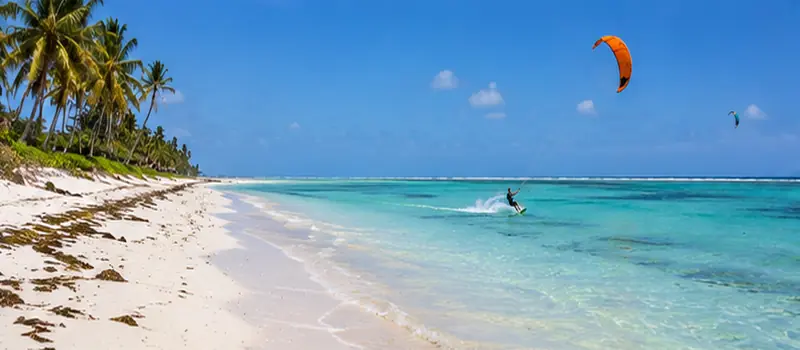
Skill Level: Intermediate, Advanced | Water Type: Flat, Choppy | Bottom: Sand, Seagrass and Coral | Launch: Locally verified clear sandy section of Bwejuu Beach.
Bwejuu Beach is a peaceful kitesurfing location on Zanzibar’s eastern coast, just north of Paje. Its long white-sand shoreline and turquoise lagoon create an attractive setting for riders seeking a quieter experience.
The beach receives the same seasonal monsoon winds as the surrounding coastline. When conditions are suitable, the lagoon can offer enjoyable freeriding with relatively flat water in sheltered sections.
However, Bwejuu is less developed as a kiteboarding destination than Paje. Launching areas, professional instruction and rescue arrangements should be confirmed before visiting.
Water depth changes considerably with the tides, and shallow reef sections can make some areas unsuitable for kitesurfing.
Best Wind Season: June–September and December–March.
Typical Wind Speed: Variable seasonal trade winds; check local forecasts rather than relying on a fixed spot-specific average.
Facilities: Restaurants and accommodation are available nearby. Permanent kite-specific facilities at the exact launch have not been confirmed.
Important Local Rules: Confirm the permitted launch and rescue arrangements locally. Avoid shallow coral, sea urchins, fishing activity and seaweed farming areas.
Planning a session at Bwejuu Beach? Visit our Bwejuu Beach Kitesurf Spot Guide for wind conditions, launch information and local restrictions.
🏄♂️ Kiwengwa Beach, Zanzibar
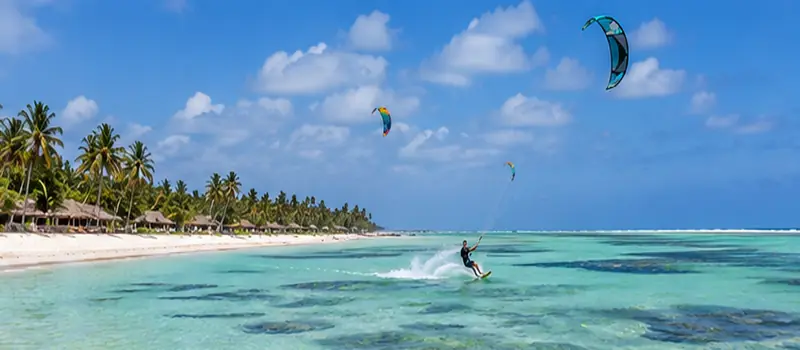
Skill Level: Beginner, Intermediate, Advanced | Water Type: Flat, Choppy | Bottom: Sand, Seagrass and Coral | Launch: Established operator-approved beach launch, with sufficient water depth.
Kiwengwa Beach is a scenic kitesurfing destination on Zanzibar’s northeastern coastline. Known for its white sand, tropical resorts and shallow turquoise lagoon, it offers an alternative to the busy kitesurfing beaches farther south.
The reef-protected water can provide enjoyable freeriding conditions during the northeast and southeast monsoon seasons.
Kiwengwa also has documented kite-school activity, making lessons possible when a local operator is active and the wind and tide are suitable.
As with other Zanzibar lagoons, the tide is a major factor. The water can retreat a considerable distance at low tide, exposing coral, seagrass and other underwater obstacles.
Best Wind Season: June–September and December–March.
Typical Wind Speed: Approximately 12–22 knots during suitable monsoon conditions.
Facilities: Kite instruction is available through established local operators; confirm current availability and equipment rental before visiting.
Important Local Rules: Follow local launching arrangements. Respect swimmers, boats and seaweed farming areas. Check tidal depth and avoid riding over shallow coral.
Planning a session at Kiwengwa Beach? Read our Kiwengwa Beach Kitesurf Spot Guide for wind conditions, facilities and local restrictions.
🏄♂️ Matemwe Beach, Zanzibar
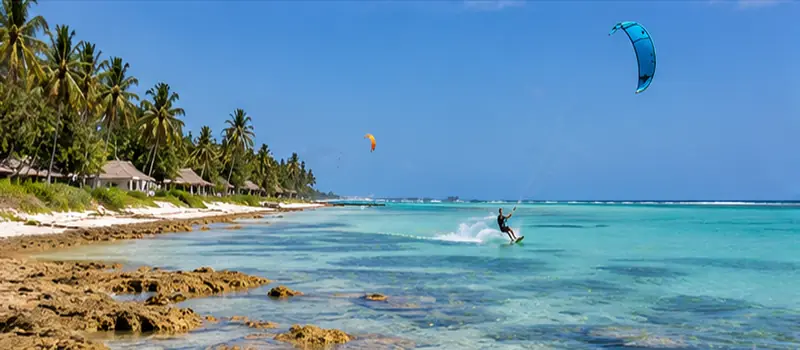
Skill Level: Intermediate, Advanced | Water Type: Flat, Choppy | Bottom: Sand, Seagrass and Coral Reef | Launch: Locally confirmed sandy beach section with sufficient tidal depth.
Matemwe Beach is a beautiful, relatively quiet destination on Zanzibar’s northeastern coast, facing the waters around Mnemba Island.
The coastline features a shallow reef lagoon, clear tropical water and traditional fishing communities. During the seasonal monsoon winds, suitable sections may offer opportunities for freeriding.
Matemwe is considerably less established as a kiteboarding centre than Paje. Its shallow reef flats, coral formations and tidal restrictions make it more appropriate for experienced independent riders.
Visitors should not assume that every section of the coastline is suitable for launching or that kite rescue services are available.
Best Wind Season: June–September and December–March.
Typical Wind Speed: Variable monsoon winds; no reliable average is established for a specific Matemwe launch.
Facilities: Accommodation and restaurants are available in the surrounding area. No permanent kite-specific facilities are confirmed at the launch.
Important Local Rules: Confirm the exact permitted launch locally. Avoid coral reefs, sea urchins, fishing boats and sensitive marine habitats. Do not ride when water depth is insufficient.
Planning a session at Matemwe Beach? Explore our Matemwe Beach Kitesurf Spot Guide for wind conditions, access information and safety considerations.
🏄♂️ Kawe Beach, Dar es Salaam
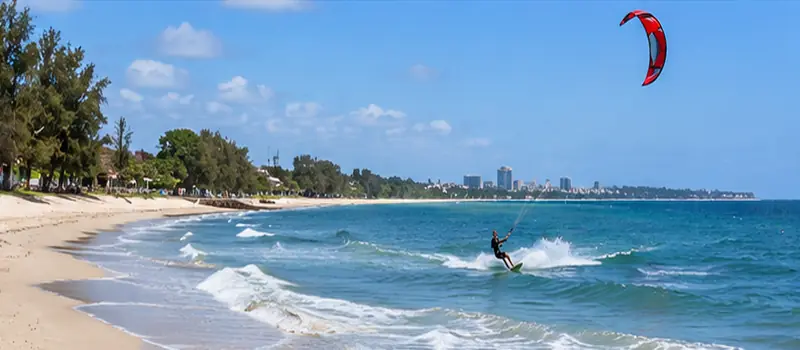
Skill Level: Intermediate, Advanced | Water Type: Choppy, Waves | Bottom: Sand, with Possible Rocks and Debris | Launch: Exact permitted kiteboarding launch not yet verified.
Kawe Beach is located along Tanzania’s mainland coastline near Dar es Salaam. Unlike Zanzibar’s reef-protected lagoons, this area offers a more urban coastal environment with variable open-water conditions.
Kawe has appeared in kitesurfing spot listings, but information about a currently operating public kite launch, professional instruction and rescue facilities remains limited.
Depending on wind direction and weather, the coastline may experience choppy water and small waves. However, visitors should not assume that the beach is suitable for kitesurfing without first confirming access and local conditions.
For now, Kawe is best regarded as a potential exploratory location rather than a fully established kiteboarding destination.
Best Wind Season: Potentially June–September and December–March, subject to local conditions.
Typical Wind Speed: Not reliably established for the exact launch.
Facilities: No permanent kite-specific facilities or rescue services have been confirmed.
Important Local Rules: Confirm whether kitesurfing is currently permitted and identify a safe launch before travelling. Avoid swimmers, fishing boats, crowded areas and submerged hazards. Do not attempt unsupported sessions.
Considering a session at Kawe Beach? Read our Kawe Beach Kitesurf Spot Guide for preliminary conditions, access information and important restrictions.
Kitesurf schools
There are several reputable kitesurf schools in Tanzania that offer professional instruction and guidance for enthusiasts of all skill levels. These schools provide a range of services, including kitesurfing techniques, safety measures, and kitesurfing equipment.
They have experienced instructors who are skilled in teaching the fundamentals of kitesurfing and helping students improve their skills. The best time to kitesurf in Tanzania is during the dry season, which typically runs from June to October, when the wind conditions are ideal for kitesurfing.
In addition to regular lessons, these schools also organize kitesurfing events where enthusiasts can come together, showcase their skills, and learn from each other. Whether you are a beginner or an experienced kitesurfer, these schools provide a supportive environment for you to enjoy this thrilling water sport.
Other things to do
Tanzania offers a wide range of activities and attractions for visitors to enjoy alongside kitesurfing. Here are some other things to do in Tanzania:
- Safari tours: Embark on a thrilling safari adventure and explore the stunning wildlife in Tanzania’s national parks, such as Serengeti and Ngorongoro Crater.
- Cultural experiences: Immerse yourself in the rich culture of Tanzania by visiting local tribes and experiencing traditional music, dance, and cuisine.
- Wildlife encounters: Besides the safari tours, you can also have close encounters with marine life by going on snorkeling adventures in the crystal-clear waters of Zanzibar or Mafia Island.
- Mountain climbing: Challenge yourself and climb to the summit of Mount Kilimanjaro, the highest peak in Africa. It’s an unforgettable experience that rewards you with breathtaking views.
With these diverse activities, Tanzania promises an unforgettable adventure for every type of traveler.
Frequently Asked Questions
Are There Any Restrictions or Regulations for Kitesurfing in Tanzania?
Kitesurfing regulations in Tanzania vary depending on the location. Some areas may require permits or have specific rules in place, while others may have more relaxed restrictions. It is important for kitesurfers to familiarize themselves with the local laws and regulations before engaging in the activity.
What Is the Best Time of Year to Visit Tanzania for Kitesurfing?
The best season to visit Tanzania for kitesurfing is during the dry season from June to October when the weather conditions are ideal with consistent winds. Popular destinations include Paje Beach, Jambiani, and Nungwi. There are also kiteboarding schools available and a range of kiteboarding equipment to choose from.
Are There Any Specific Safety Precautions or Tips for Kitesurfing in Tanzania?
When kitesurfing in Tanzania, it is important to prioritize safety. This includes using recommended gear, being aware of common hazards, receiving proper training and lessons, and familiarizing oneself with emergency procedures and available rescue services.
Can Beginners Learn How to Kitesurf in Tanzania, or Is It More Suitable for Experienced Riders?
Beginners can learn how to kitesurf in Tanzania, as there are beginner-friendly beaches and learning programs available. Suitable kite sizes and safety gear for beginners are provided. Some of the best beginner-friendly kitesurfing spots in Tanzania include Paje Beach, Jambiani, and Nungwi.
Are There Any Local Communities or Organizations in Tanzania That Promote and Support Kitesurfing?
Yes, there are local kitesurfing communities and organizations in Tanzania that promote and support kitesurfing. They organize kitesurfing events, competitions, and provide kitesurfing schools and equipment rental services for enthusiasts of all levels.
I’m extremely impressed along with your writing skills and also with the layout to your blog. Is this a paid subject or did you modify it your self? Either way stay up the nice quality writing, it’s uncommon to see a nice weblog like this one nowadays!
Thanks!