

Best Kitesurfing Spots at Fuerteventura
Fuerteventura sits right in the path of the Atlantic trade winds, so kitesurfing here is close to guaranteed from May through September, and solid the rest of the year too. But the coastline changes personality every few kilometers: flat lagoons in the south, punchy waves in the north, sheltered bays in between. Here are the best kitesurfing spots at Fuerteventura — Flag Beach, El Burro, El Cotillo, Sotavento, and Majanicho — with the wind, tide, and skill-level details to pick the right one.
Additionally, it will provide information on kitesurfing schools and other activities available for non-kitesurfers. Whether you are a seasoned kitesurfer or a beginner looking to learn, Fuerteventura offers a diverse range of spots to suit all skill levels. So, pack your gear and get ready to experience the thrill of kitesurfing in one of the best locations in the world.
Weather
The weather conditions in Fuerteventura make it an ideal destination for kitesurfing enthusiasts. Known for its pleasant climate, Fuerteventura experiences warm temperatures throughout the year, making it a popular spot for kitesurfing.
With average temperatures ranging from 20 to 28 degrees Celsius, it offers the perfect conditions for outdoor water sports. Additionally, the island boasts impressive wave heights, particularly on the north and west coasts, providing an exhilarating experience for kitesurfers.
Wind conditions
The island is also blessed with consistent trade winds, blowing from the northeast, which provide the necessary wind speed and direction for kitesurfing. These winds, known as the ‘Trades,’ are prevalent from May to September, making it the prime season for kitesurfing in Fuerteventura.
Here are some key factors to consider when evaluating the wind conditions in Fuerteventura:
- Wind direction: Fuerteventura benefits from prevailing northeast trade winds, which blow cross-onshore, providing ideal conditions for kitesurfing.
- Wind strength: The wind in Fuerteventura ranges from moderate to strong, making it suitable for both beginners and experienced riders.
- Wind consistency: The consistent trade winds ensure a reliable and continuous flow of wind, allowing for longer sessions on the water.
Before heading out, it’s advisable to check the wind forecast to plan your kitesurfing sessions accordingly.
Water conditions
One important aspect to consider when kitesurfing in Fuerteventura is the quality of water conditions. The island boasts some of the best kitesurfing spots in the world, thanks to its ideal water conditions.
The wave size varies depending on the location, with spots like El Cotillo and Flag Beach offering excellent wave conditions for advanced riders, while spots like Sotavento are better suited for beginners due to their calmer waters.
It is important to note that tidal currents can be strong in certain areas, so it is crucial to be aware of and respect these currents.
🏄 Corralejo
.
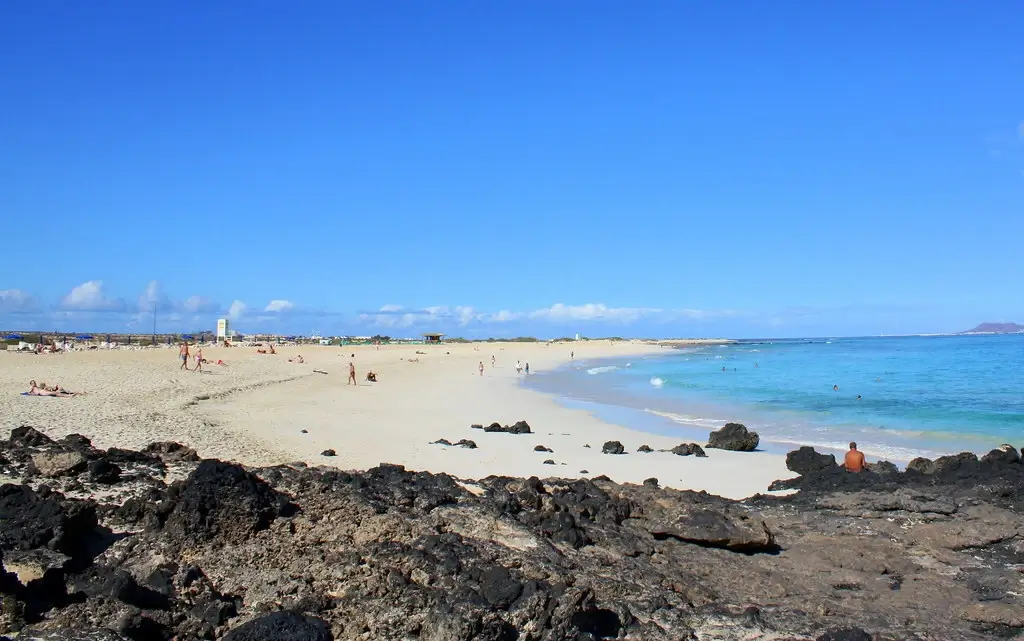
Skill Level: Beginner to Advanced | Water Type: Flat to bump & jump | Bottom: Sand near shore, reef further out | Launch: Wide white-sand beach, car accessible Wind: 15–25 knots, north-easterly | Peak Season: May–September
Flag Beach is the spot most riders picture when they think of kitesurfing in Fuerteventura. It sits inside the Corralejo Dunes Natural Park facing Isla de Lobos, with an easy car-accessible launch that rarely feels crowded. Riders naturally spread into zones — beginners near the schools, freestylers and jumpers further along.
The layout is forgiving: the inside is mostly flat sand, ideal for waterstarts and body-dragging, while the outer reef edge gives intermediates small chop for unhooked tricks. High tide is the safer window — at low tide, rocks near shore become a hazard. Several kite schools run rescue boats here, making it one of the most reliable beginner kitesurf spots Fuerteventura offers.
🏄 El Cotillo
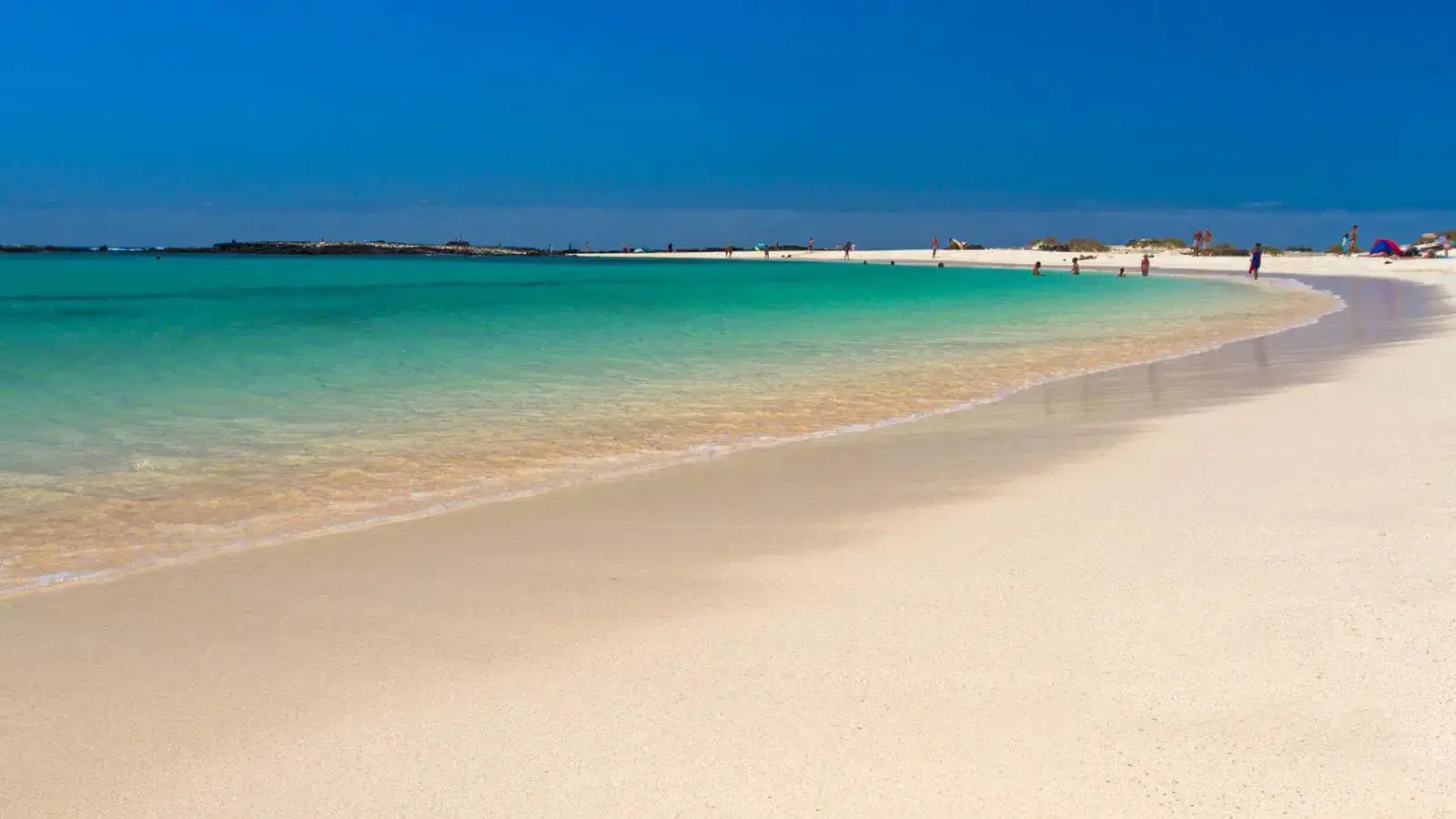
Skill Level: Advanced | Water Type: Powerful beach-break waves | Bottom: Sand with reef sections | Launch: Cliffside beach, zoned for kite/surf/windsurf Wind: 20–30 knots, gusty, side-onshore | Peak Season: June–August
On the west coast, El Cotillo is a different beast. Wind gusts past 20 knots, funneled by the terrain, and Atlantic swell creates powerful beach-break waves. The beach is zoned into separate areas for surfers, kitesurfers, and windsurfers.
This isn’t a spot for beginners — the gusty wind and punchy shorebreak reward experience and punish hesitation. But the scenery and wave quality justify the drive: dramatic cliffs, a lighthouse backdrop, and a wave good enough to plan a session around. Advanced riders chasing wave riding Fuerteventura kitesurf rank El Cotillo among the island’s top picks.
🏄 Sotavento Beach
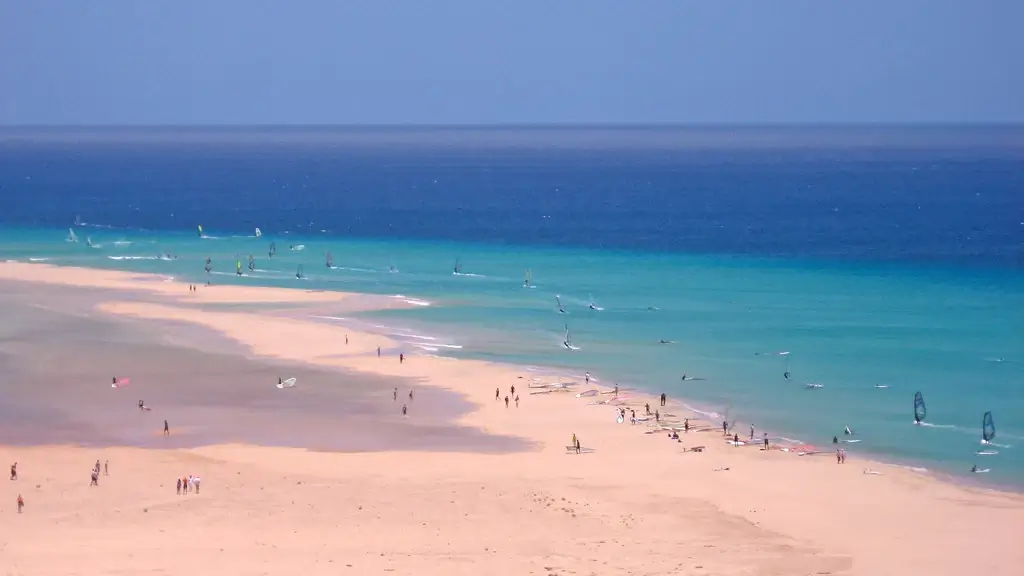
Skill Level: Beginner to Freestyle/Freeride | Water Type: Flat lagoon (tide-dependent) | Bottom: Soft sand | Launch: Long open beach, resort-adjacent parking Wind: 18–28 knots, easterly, can turn gusty | Peak Season: June–August
Sotavento, on the southeast coast, built Fuerteventura’s reputation as a freestyle paradise. When tide coefficients are high enough, a shallow lagoon forms behind a sandbar — flat, waist-deep water stretching hundreds of meters, ideal for beginners’ first runs and freestylers throwing unhooked tricks. Wind funnels through the narrower part of the island, so it’s strong and consistent, though gustier than further north.
Sotavento has hosted world-level competitions, and it’s easy to see why once you’ve ridden the lagoon at the right tide. The catch: it only forms on specific tide cycles, so check a tide table first — arrive on the wrong day and you’ll find open, choppier water instead. This is one of the most relaxed flat water kitesurfing spots Fuerteventura offers.
🏄 Majanicho

Skill Level: Intermediate to Advanced | Water Type: Wave spot in a natural bay | Bottom: Rock and reef | Launch: Small fishing village, limited facilities Wind: 18–25 knots, north-easterly | Peak Season: May–September
Majanicho suits riders who want fewer crowds and don’t mind a rougher edge. This small former fishing village north of Corralejo sits inside a bay that tames incoming swell just enough to produce clean, often sizeable waves. The inside section breaks both left and right, suiting intermediates working on transitions, while the outside can surprise with genuinely large faces depending on swell and tide.
There’s no kite school or rescue boat here, so it rewards self-sufficient riders — also why it stays quieter than Corralejo or Sotavento in high season. For experienced kiters after uncrowded wave spots Fuerteventura rarely gets mentioned for, Majanicho is worth the bumpier drive.
Kitesurfing schools
Kitesurfing schools in Majanicho offer professional instruction and guidance for kitesurfing enthusiasts of all skill levels. These schools provide a range of services to cater to the needs of every individual.
For beginners, they offer comprehensive beginner lessons that cover the basics of kitesurfing, including equipment rental and safety guidelines. These lessons are designed to ensure a safe and enjoyable learning experience.
For more advanced riders, the schools offer specialized courses that focus on advanced techniques and tricks to take their skills to the next level.
Additionally, kitesurfing schools in Majanicho also provide progression programs for those looking to improve their skills and progress in the sport. With experienced instructors and a supportive learning environment, these schools are the perfect place to learn and master the art of kitesurfing.
Quick Takeaways
- Flag Beach — 15–25 knots NE, beginner to advanced, most versatile.
- El Burro — 15–25 knots NE cross-shore, consistent left waves, June–August.
- El Cotillo — 20–30 knots gusty, advanced only, best surf quality.
- Sotavento — 18–28 knots easterly, tide-dependent flat lagoon, top freestyle spot.
- Majanicho — 18–25 knots NE, uncrowded wave bay, self-sufficient riders only.
- Peak season island-wide: May–September; always check tides before heading out.
FAQs
What is the best time of year to kitesurf in Fuerteventura? Peak season runs May–September, with north-easterly trades at their strongest, typically 15–30 knots depending on the spot.
Which spot is best for complete beginners? Flag Beach and the Sotavento lagoon (right tide) are most beginner-friendly, with sandy bottoms, shallow water, and kite schools offering rescue support.
Do I need wave experience for El Cotillo or Majanicho? Yes — both produce surf-quality waves over rock or reef, and El Cotillo gets particularly gusty, so they suit intermediate-to-advanced riders.
Is the Sotavento lagoon always flat? No — it only forms at high tide coefficients. Other cycles bring open, choppier water, so check a tide table first.
Can I rent gear on the island? Yes — Corralejo and Sotavento both have kite schools and rental centers, from beginner lessons to gear rental.
References
- Visit Fuerteventura — official tourism board spot guides
- Ion Club Fuerteventura — kitesurfing conditions guide
- Kiteadvice — spot-by-spot breakdown of the island’s kite areas
It’s actually a cool and helpful piece of info.
I am glad that you just shared this useful info with us.
Please stay us informed like this. Thans forr
sharing.
Thanks!